Combined Science vs Triple Science: Which Chemistry Path Fits Your Child?
Confused about why your child’s school offers combined science to some students and separate sciences to others, and worried the wrong choice might close doors later? This decision feels bigger than it usually is.
The honest answer is that combined science vs triple science comes down to depth, not which subjects get studied. Both routes cover biology, chemistry, and physics, but triple science goes considerably further into each one.
This guide breaks down exactly how the two routes differ, what real 2025 grade data shows, and how to know which path actually fits your child’s chemistry future.
What Combined Science and Triple Science Actually Mean
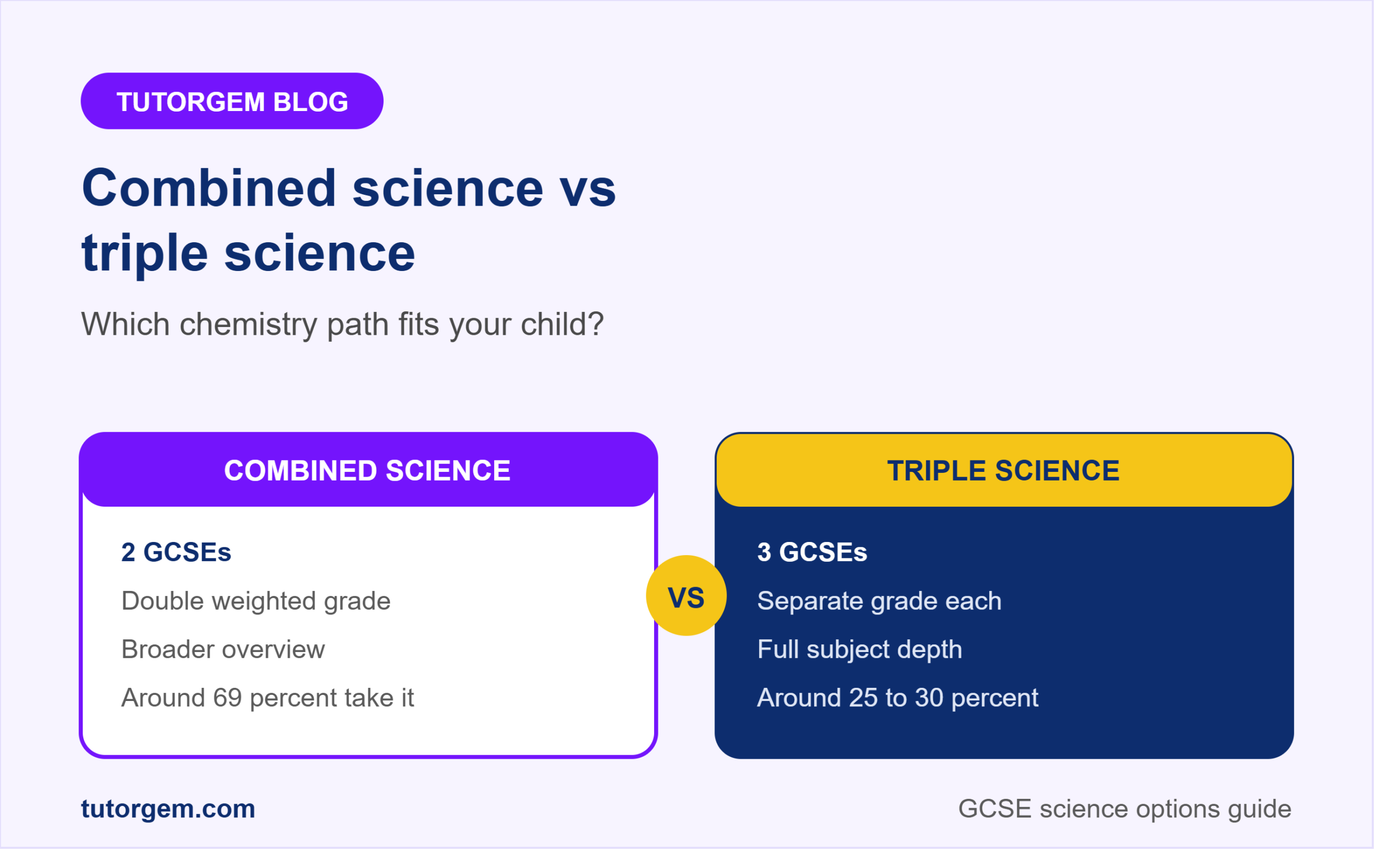
Combined Science, also called Double Science or the Trilogy award depending on the exam board, teaches biology, chemistry, and physics together but results in two GCSE grades rather than three. Triple Science, sometimes called Separate Sciences, covers the same three subjects but awards three individual GCSEs, one for each discipline.
Every GCSE student in England studies science as a core subject alongside English and maths, but the route taken through that requirement varies significantly by ability and school policy.
How Exam Boards Structure Each Route
AQA offers Combined Science under the name Trilogy, alongside separate Triple Science qualifications in biology, chemistry, and physics. Edexcel and OCR follow a similar dual structure, with OCR offering Combined Science through its Gateway or Twenty First Century specifications.
Each board allows schools to choose which specification to teach, so checking with your child’s school directly confirms exactly which version applies to their course.
Combined Science vs Triple Science: The Core Differences
The two routes share identical core scientific principles, but differ meaningfully in content depth, grading structure, and exam format.
Grading and Tier Rules Compared
Combined Science students receive a double weighted grade, such as 6-6 or 5-4, reflecting performance across all three sciences combined into two GCSEs. Triple Science students receive three separate 9 to 1 grades, one per subject, since each science is examined and graded independently.
| Feature | Combined Science | Triple Science |
|---|---|---|
| Number of GCSEs | 2 | 3 |
| Grading format | Double weighted, e.g. 6-6 | Separate 9 to 1 per subject |
| Tier flexibility | All Foundation or all Higher | Can mix tiers between subjects |
| Typical uptake | Around 69 percent of students | Around 25 to 30 percent of students |
| Content depth | Broader overview | Full subject depth |
Tier flexibility matters more than many parents realize. Combined Science students must sit either all Foundation or all Higher papers across every science, while Triple Science students can choose Foundation for one subject and Higher for another based on individual strengths.
How Schools Actually Decide Who Takes Triple Science
Many schools do not leave this decision entirely to families. Instead, they base placement on Year 9 science test performance, offering Triple Science to higher attaining students while placing others on the Combined Science route by default.
This school led selection process explains why comparing raw grade outcomes between the two routes can be misleading, since the Triple Science cohort typically starts from a stronger academic baseline already.
Is Triple Science Really Harder Than Combined Science
Content depth, not inherent difficulty, separates the two routes. A student capable of handling Triple Science content generally finds it manageable, while a student better suited to Combined Science would likely struggle if pushed into the deeper triple route unnecessarily.
What the 2025 Grade Data Shows
According to a STEM Learning report, approximately 69 percent of GCSE students take Combined Science, while Triple Science accounts for the remaining 25 to 30 percent of entries. Over 40 percent of Triple Science entries achieved grades 9 to 7 in 2025, though this figure reflects the stronger starting cohort rather than proving the qualification itself is inherently easier to score highly in.
This data confirms that neither route is universally superior. The right fit depends entirely on a student’s individual strengths and future academic direction.
A Real Case: Moving From Combined to Triple Mid-Year
One TutorGem student began Year 10 on the Combined Science route but discovered a strong interest in chemistry specifically after an inspiring topic on organic reactions. His school agreed to let him switch to Triple Science, though this meant catching up on additional chemistry content already covered by his Triple Science classmates.
His tutor built a focused catch up plan covering the extra depth required, particularly around quantitative chemistry and required practicals unique to the Triple specification. By his mock exams, he was performing in line with students who had followed Triple Science from the start.
This case shows that switching routes mid-course is possible with the right support, though earlier decisions generally involve less catch up pressure than late transfers.
Which Path Suits Your Child’s Chemistry Future
Students planning to study science subjects at A-level, particularly chemistry, biology, or physics individually, generally benefit more from the depth Triple Science provides. Those with broader academic interests outside science often find Combined Science gives them more flexibility elsewhere in their GCSE options.
Questions to Ask at Options Evening
Ask your child’s school directly whether Triple Science suits their current attainment level, and confirm which sixth form science requirements apply to any A-level subjects your child might pursue later. Most sixth form courses accept strong Combined Science grades, so closing doors is less common than many parents assume.
How a Tutor Supports Either Science Pathway
A tutor experienced across both routes helps identify exactly where extra support is needed, whether that means strengthening core content for Combined Science or building the additional depth required for Triple Science success.
TutorGem’s science tutoring programs support students across both Combined and Triple Science routes, while specialist chemistry tutoring helps students aiming for individual science GCSEs build the deeper understanding Triple Science demands. Families juggling multiple GCSE subjects alongside science also benefit from TutorGem’s GCSE tutoring support, which covers a full subject range under one consistent study plan.
Frequently Asked Questions
Does Combined Science limit A-level science options?
No. Most sixth form courses accept strong Combined Science grades for A-level science subjects, though some highly competitive courses may prefer Triple Science background specifically.
Can a student switch from Combined to Triple Science partway through GCSEs?
Switching is possible in many schools, though it usually requires catching up on additional content already covered by students who started on the Triple Science route from the beginning.
Why do some schools not offer Triple Science at all?
Timetabling and staffing constraints mean smaller schools sometimes only offer Combined Science, which remains a fully valid and widely accepted qualification regardless of school size.
Is a 6-6 in Combined Science better than three grade 5s in Triple Science?
Universities and sixth forms typically value grade quality over qualification type, so a strong Combined Science result often compares favorably against weaker individual Triple Science grades.
How many exams does Triple Science involve compared to Combined Science?
Triple Science students typically sit six separate exam papers across biology, chemistry, and physics, while Combined Science students sit six papers that count toward only two overall GCSE grades.
Understanding combined science vs triple science before options evening removes unnecessary pressure from what should be a straightforward decision based on your child’s actual strengths. If your child is navigating either science pathway and needs extra support in chemistry specifically, TutorGem’s experienced tutors can assess their current level this week and build a plan suited to their exact route.