How to Take Notes That Actually Help You Remember
Pages of notes. Almost nothing remembered a week later. This gap frustrates far more students than admit it out loud.
The problem is rarely effort. It comes down to how those notes get written and used afterward. Learning how to take notes that actually help you remember means treating notes as a tool for recall, not just a record of what was said.
This guide breaks down the note-taking methods backed by real research, and shows exactly how to review notes so they stick instead of gathering dust.
Why Most Notes Get Written but Never Really Used
Many students write notes during a lesson, then never open them again until the night before an exam. This gap between writing and reviewing wastes most of the value notes could offer.
What the Research Actually Found
A 2013 academic study comparing note-taking methods found something worth knowing honestly. Students using the structured Cornell method produced qualitatively better organized notes, yet this did not automatically translate into higher exam achievement compared to other methods.
This finding matters. It shows that the format of your notes matters less than what you actually do with them afterward, through review and active recall, rather than the note-taking system alone.
How to Take Notes That Actually Help You Remember
The strongest note-taking approach combines a clear structure during the lesson with active review afterward, rather than relying on either step alone.
The Cornell Method Explained Simply
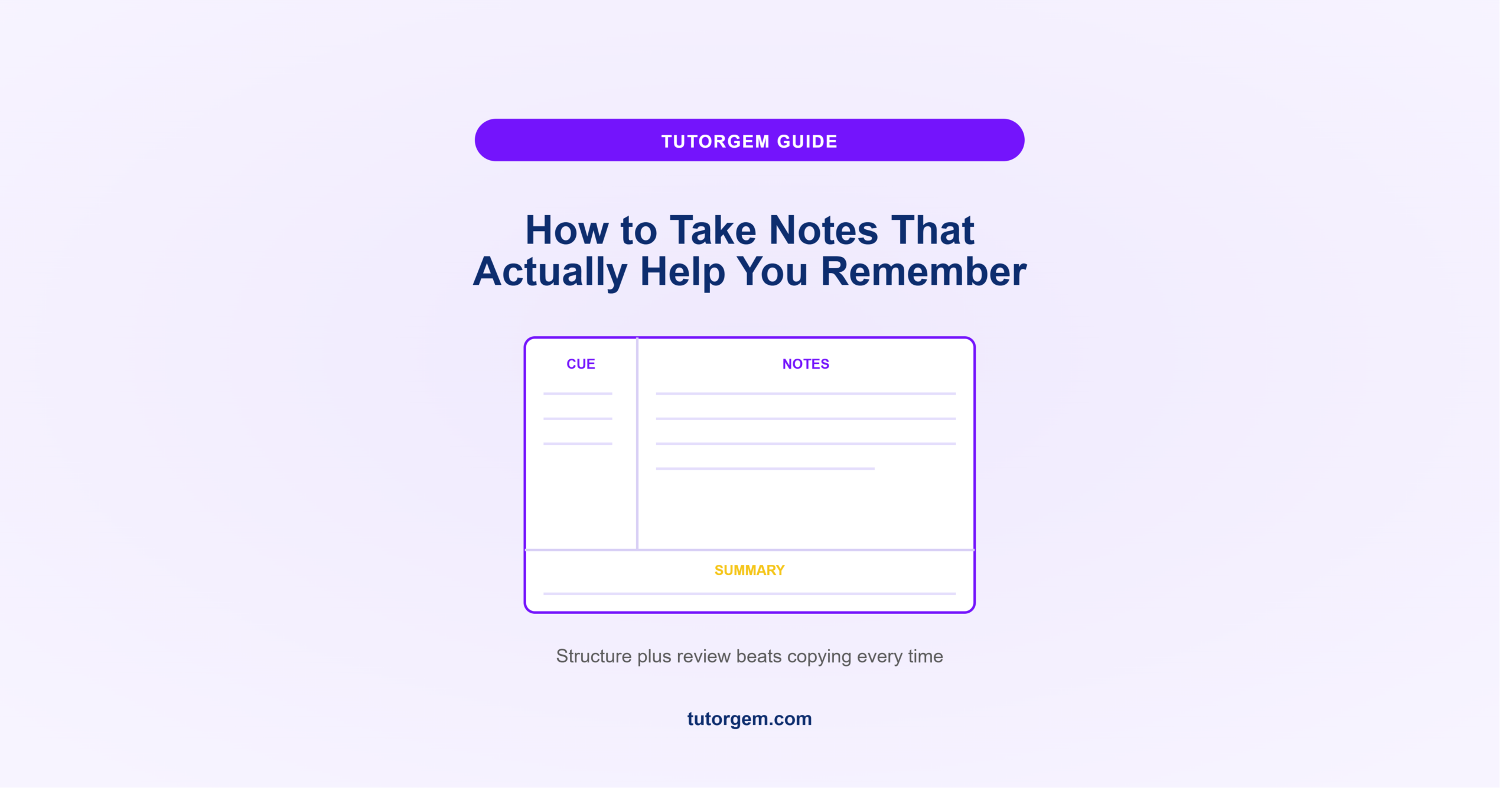
The Cornell method divides a page into three sections. A narrow cue column on the left holds keywords and questions, a wider notes column on the right holds the main content, and a summary section at the bottom condenses the entire page into one or two sentences.
This structure works well because it forces a second pass over the material during the summary step, building in review rather than leaving it entirely to chance later.
Why Summarizing Matters More Than Copying
Writing notes word for word from a teacher or textbook creates a false sense of understanding, since copying requires little real processing of the material. Summarizing the same content in your own words forces genuine engagement with what it actually means.
| Note-Taking Method | Best For | Key Limitation |
|---|---|---|
| Cornell method | Structured review with built-in summary | Takes more setup time initially |
| Sentence method | Fast-paced lectures, capturing everything | Can become disorganized without review |
| Mind mapping | Visual subjects, showing connections | Less useful for dense factual content |
| Outline method | Clearly structured topics | Rigid for less linear subjects |
Choosing the Right Method for the Right Subject
No single note-taking method works best across every subject, and forcing one system onto every class often creates more friction than benefit.
When a Simpler Method Works Just as Well
Fast-moving lectures with heavy content sometimes suit a quick sentence method better, capturing everything first and organizing it properly during a later review session. Visual subjects, like biology processes or historical timelines, often benefit more from mind mapping than a rigid columned structure.
A Real Case: Rewriting Instead of Just Rereading
One TutorGem student took detailed, word for word notes during every chemistry lesson, yet consistently struggled to recall the material during revision weeks later.
Her tutor introduced a simple weekly habit. Instead of just rereading her notes, she rewrote each page as a condensed summary in her own words, then tested herself against the original without looking. Within a month, her recall of core reaction mechanisms improved significantly.
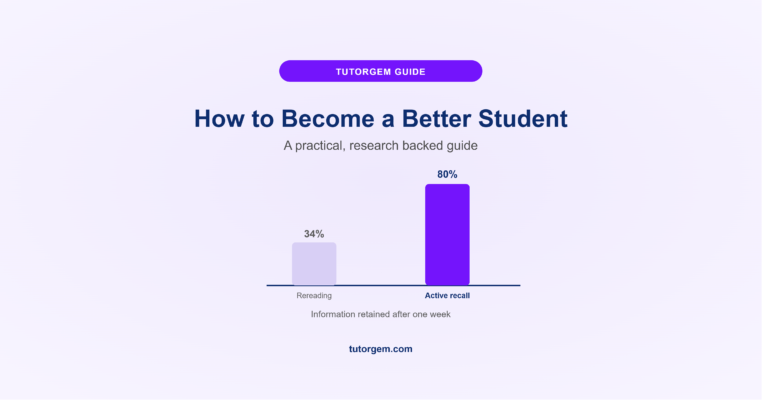
This case reflects the research closely. The act of processing and summarizing built far stronger memory than her original detailed notes ever had on their own.
A Simple Weekly Review Habit Worth Building
Set aside twenty minutes each week to condense that week’s notes into a short summary, then test yourself against the original content without looking.
Questions to Ask While Reviewing Old Notes
Ask if you can explain this week’s topic without looking at your notes at all. Ask whether your summary captured the actual meaning, or simply repeated phrases from the original source.
How a Tutor Helps Build Better Note-Taking Habits
A tutor reviews how a student actually processes and reuses their notes, correcting passive habits like copying that quietly limit real understanding.
TutorGem’s online tutoring sessions build active summarizing and self-testing directly into the revision process, helping students turn pages of notes into genuine, lasting recall.
Frequently Asked Questions
Is the Cornell method the best note-taking system for exams?
Research shows the Cornell method produces well-organized notes, though it does not automatically guarantee better exam results without genuine review and self-testing afterward.
How often should I review my notes to remember them long term?
Reviewing notes within the first week, then again a few weeks later, builds stronger long term memory than reviewing only once, right before an exam.
Should I write notes by hand or type them on a laptop?
Handwriting often encourages more summarizing and processing during the note-taking process itself, though either method works well when followed by active review afterward.
What is the biggest mistake students make with note-taking?
Copying content word for word without any later review is the most common mistake, since it creates a false sense of understanding that rarely holds up under exam conditions.
Can a tutor help improve how I take and use notes?
Yes. A tutor can identify whether notes are being used passively or actively, then introduce structured review habits that turn existing notes into stronger, lasting recall.
Learning how to take notes that actually help you remember comes down to structure during the lesson and honest review afterward, not simply writing more. If your notes pile up without ever translating into real recall, TutorGem’s experienced tutors can help you build a review habit that finally makes them count.