A-Level Physics Past Papers: How to Use Them the Right Way
You have printed and prepared last twenty past papers. But still you are not satisfied on exam day.
This happens to many students. They practice a lot. But, they practice in the wrong way.
Using A-level physics past papers well means more than just doing them. It means reviewing them the right way too.
This guide shows exactly how to use past papers to build real exam skill, not just familiar faces on a page.
Why A-Level Physics Past Papers Matter So Much
Physics exams test more than memory. They test how you apply formulas under real time pressure. Past papers are the closest thing to real exam practice you can get.
What Makes A-Level Physics Different From GCSE
A-level physics moves faster and goes deeper than GCSE. Questions often combine several topics in one problem. This means past paper practice matters even more at this level.
Students who only revise theory often struggle here. The gap between knowing a formula and using it under pressure only closes through real practice.
The Right Way to Use A-Level Physics Past Papers
Many students rush through past papers. They check the final answer and move on. This habit skips the most useful part of the process.
Timed Practice Beats Reading Answers
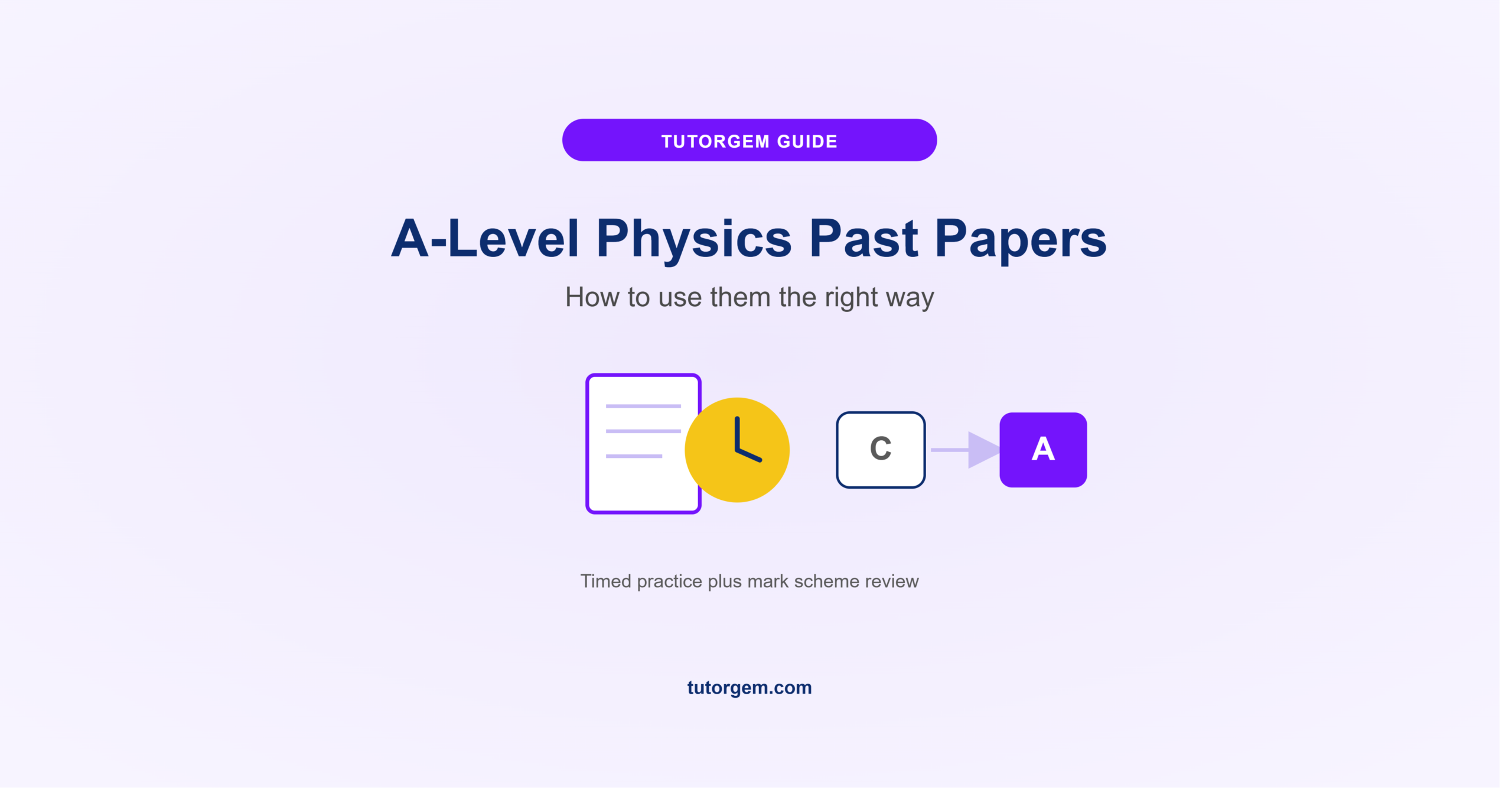
Set a real clock for every paper you attempt. Real exam pressure changes how your brain works. Practice without a timer trains a different skill than the actual exam.
This single change often reveals where marks are really lost. Not from lack of knowledge, but from running out of time on long calculation questions.
Mark Schemes Reveal More Than the Answer
A mark scheme shows exactly how examiners award points. It often rewards method marks, even when the final number is wrong.
Reading the mark scheme after every paper teaches you how examiners think. This matters more than checking whether your answer matches the printed one.
How Tough Is A-Level Physics Really
A-level physics has a reputation as one of the harder science subjects. Real exam data backs this up.
What the 2025 Results Show
According to exam board results data, 32.0 percent of A-level physics entries achieved an A* or A grade in 2025, from over 45,000 entries nationally. This places physics among the more competitively graded science subjects at A-level.
These numbers show strong grades are possible. They also confirm that solid preparation genuinely separates top scores from average ones.
A Real Case: Same Content, Better Technique
One TutorGem student knew his physics theory well. His mock exam score still stayed stuck around a C grade.
His tutor reviewed his past paper answers closely. The real problem was clear. He skipped reading full questions and missed easy marks on the first line of long problems.
They rebuilt his approach around slower first reads and timed practice. Within six weeks, his next mock rose to a B, then an A. His knowledge barely changed. His exam technique did.
A Simple Weekly Past Paper Plan
Complete one full timed paper each week. Review every mistake the same day, while the question is still fresh in your mind.
Questions to Ask Yourself After Each Paper
Ask which questions took too long to finish. Ask which mark scheme points you missed even with a correct final answer. These two questions reveal more than your raw score alone.
How a Tutor Helps You Use Past Papers Better
A tutor spots patterns in your mistakes that are hard to see on your own. This turns past paper practice from a guessing game into a clear improvement plan.
TutorGem’s physics tutoring programmes build past paper review directly into every session, alongside broader A-level tutoring support across other subjects. This helps students fix exact weak points instead of repeating the same mistakes paper after paper.
Frequently Asked Questions
How many A-level physics past papers should I complete before the exam?
Most students benefit from ten to fifteen full papers, spread out weekly rather than crammed into the final month before exams.
Should I use past papers from every exam board?
Focus mainly on your own exam board’s papers first, since question style and mark scheme wording can differ between boards.
Is it better to do past papers open book or under exam conditions?
Exam conditions matter more as your exam date gets closer, since this builds the timing skill and pressure tolerance you need on the actual day.
What should I do if I keep running out of time on past papers?
Practice answering easier questions faster first, then spend saved time on harder, longer calculation questions instead of rushing through everything evenly.
Do A-level physics past papers help with exam technique, not just content?
Yes. Reading mark schemes closely teaches exam technique directly, showing exactly how method marks and final answers get awarded together.
Using A-level physics past papers the right way turns practice time into real exam skill, not just repetition. If your mock scores feel stuck despite knowing the content well, a closer look at your technique might be the missing piece. TutorGem’s experienced physics tutors can review your past paper answers this week and show you exactly where marks are slipping away