How to Build a Revision Timetable That Actually Works
A colorful timetable pinned to the wall. Abandoned by day three. This happens to more students than admit it.
Most revision timetables fail not from laziness, but from being built backwards, packed with good intentions instead of realistic time. Learning how to build a revision timetable that survives contact with real life changes everything.
This guide walks through a structure that actually holds up under pressure, backed by real research and a genuine student example.
Why Most Revision Timetables Fail Within a Week
A timetable built in one enthusiastic evening often ignores how tiring real revision actually feels day after day. This mismatch between the plan and reality causes most timetables to collapse fast.
What Research Says About Structured Routines
According to a 2024 Student Minds survey, students following structured routine schedules reported 40 percent lower stress levels and better sleep quality compared to peers without one. Structured students were also less likely to cram, spreading exposure to content more evenly across the weeks before exams.
This data confirms that a working revision timetable delivers benefits well beyond simple organization, directly reducing the stress that builds when revision feels chaotic and last minute.
How to Build a Revision Timetable Step by Step
A realistic revision timetable starts from your actual exam dates, not from an idealized list of subjects you wish you had more time for.
Start With Exam Dates, Not Subjects
Mark every exam date first, then count backward to see how many real weeks remain. This single step prevents the common mistake of treating every subject as equally urgent, regardless of how soon it will actually be tested.
Subjects with exams in the first week of a season deserve more immediate attention than those tested a month later, even if your confidence level feels similar across both.
Use a RAG Rating to Prioritize Topics
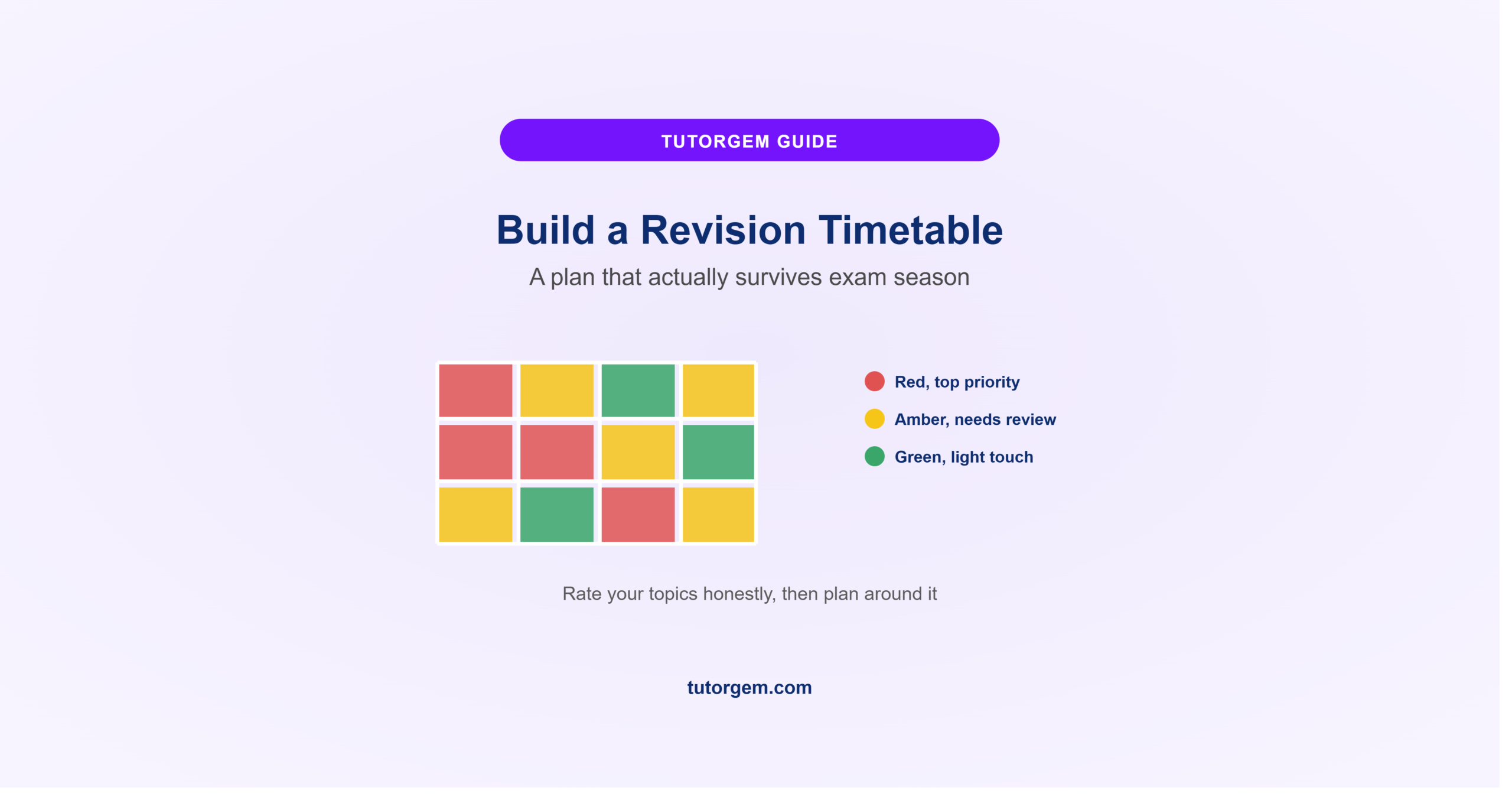
Rate every topic red, amber, or green based on your current confidence level, then build your timetable around spending the most time on red topics first.
| Topic Rating | What It Means | Time Allocation |
|---|---|---|
| Red | Little understanding, high priority | Most weekly hours |
| Amber | Partial understanding, needs review | Moderate weekly hours |
| Green | Strong understanding, light touch only | Minimal weekly hours |
This honest self-rating system prevents the common trap of repeatedly revising comfortable green topics while red topics quietly stay untouched until it is too late.
Common Mistakes That Break a Timetable Fast
Even a well-intentioned revision timetable often collapses due to a small number of repeatable, avoidable mistakes.
Scheduling Every Hour Leaves No Room for Real Life
Packing every single hour with revision, without breaks, meals, or rest days, sets an unrealistic standard that almost guarantees the plan gets abandoned within days.
Building in deliberate rest and buffer time actually makes a revision timetable more durable, since missing one session no longer means the entire plan feels broken beyond repair.
A Real Case: From Chaos to a Working Plan
One TutorGem student had rewritten her revision timetable four separate times in one month, abandoning each version within a few days after falling behind on the very first day.
Her tutor helped rebuild it around a realistic RAG rating of her actual topics, with built-in rest days and flexible catch-up slots rather than a rigid, hour-by-hour schedule. This version survived the full six weeks leading up to her exams.
Her results improved not because the new timetable demanded more hours, but because it matched how her real week actually functioned, instead of an idealized version that never accounted for tiredness or setbacks.
A Simple Weekly Template Worth Copying
Divide each week into morning, afternoon, and evening slots, assigning red rated topics to your highest energy time of day rather than treating every slot as equally productive.
Questions to Ask When Reviewing Your Week
Ask honestly which sessions you actually completed versus planned. Ask whether your RAG ratings from last week still feel accurate, or if any red topics have genuinely improved to amber.
How a Tutor Helps Build a Realistic Timetable
A tutor identifies which topics genuinely deserve red priority status, based on real exam board weighting rather than a student’s gut feeling about difficulty alone.
TutorGem’s online tutoring sessions help students build revision timetables around actual exam board priorities and honest topic ratings, replacing guesswork with a structure genuinely built to last the full revision period.
Frequently Asked Questions
How far in advance should I start building a revision timetable?
Most students benefit from starting six to eight weeks before their first exam, giving enough time to rotate through red, amber, and green topics without last minute panic.
Should a revision timetable include rest days?
Yes. Built-in rest days make a timetable far more sustainable, since missing one planned session no longer means the entire schedule feels broken.
What is a RAG rating and why does it help revision planning?
RAG stands for red, amber, and green, a simple honest rating of topic confidence that directs the most revision time toward genuinely weak areas rather than comfortable, already-strong topics.
Is it better to revise one subject per day or mix several?
Mixing several subjects within a week, rather than dedicating entire days to one subject, generally supports better long term retention and prevents burnout on any single topic.
Can a tutor help build a personalized revision timetable?
Yes. A tutor can identify genuine priority topics based on exam board weighting and past paper patterns, building a timetable around real exam demands rather than guesswork alone.
Learning how to build a revision timetable that survives real life, not just the first enthusiastic week, makes the difference between organized progress and repeated abandoned plans. If your revision schedule keeps falling apart, TutorGem’s experienced tutors can help build one around your actual strengths, weaknesses, and real exam board priorities.