How AI Tutoring in 2026 Is Changing Education?
AI tutoring in 2026 has made homework help available at midnight, with no appointment needed.
Parents and students now wonder if a chatbot can genuinely replace a real tutor. The honest answer sits somewhere in between, and knowing exactly where changes how you should actually use AI tutoring in 2026.
This guide breaks down what AI tutoring in 2026 does well, where it still falls short, and how combining it with real guidance produces the strongest results for students using adaptive learning tools today.
Why AI Tutoring in 2026 Suddenly Feels Everywhere
AI tutoring tools moved from a novelty to a daily study habit in a remarkably short time. This shift touches nearly every subject, exam board, and age group at once, from primary school homework apps to university level study assistants.
The Real Numbers Behind This Shift
Global student AI usage jumped from 66 percent in 2024 to over 86 percent by the start of 2026, according to research from the Digital Education Council. Teacher adoption of classroom AI tools has climbed just as fast, nearly doubling in two years as intelligent tutoring systems became mainstream in schools.
This scale matters. It shows AI tutoring in 2026 is not a passing trend but a genuine shift in how students study, practice, and get instant feedback outside the traditional classroom.
What AI Tutoring in 2026 Actually Does Well
AI tutoring tools genuinely excel at certain tasks, and understanding these strengths helps you use an AI study assistant wisely instead of blindly trusting every answer.
Instant Feedback and Endless Patience
An AI chatbot never gets tired of explaining the same concept a fifth time. This patience alone helps students who feel embarrassed repeatedly asking a human teacher the same question in class.
Quick explanations, generated practice problems, and instant checking make AI tutoring genuinely useful for reinforcing content a student has already been taught, rather than learning something entirely new through a machine learning tutor alone.
The Real Research on Learning Speed
A 2025 Harvard University physics study found that students using AI tutors learned more than twice as much in less time compared to students in traditional active-learning classrooms. This result surprised many researchers, since it came from a carefully controlled academic study, not a marketing claim from an EdTech company.
This finding shows real potential for AI tutoring in 2026, particularly for reinforcing material through repeated, adaptive practice rather than replacing structured human teaching entirely.
Where AI Tutoring in 2026 Still Falls Short
Despite strong adoption numbers, AI tutoring has clear limits that matter for anyone relying on a virtual tutor heavily.
The Confidence Gap Nobody Talks About
Research from the Digital Education Council found that 58 percent of students feel they lack sufficient skills to use AI tools effectively, despite near universal adoption of these digital learning tools. This gap between usage and genuine understanding creates a real risk for students who assume fluency equals accuracy.
AI tools can also produce confidently wrong answers, particularly on multi-step problems in subjects like organic chemistry or advanced mathematics, where a small error early on ruins every following step in the reasoning chain.
| AI Tutoring Strength | AI Tutoring Limitation |
|---|---|
| Instant, patient explanations | Cannot always catch its own errors |
| Endless practice problem generation | Struggles with complex, multi-step reasoning |
| Available any time of day | No real accountability for progress |
| Good for reinforcing known concepts | Weak at teaching genuinely new material |
A Real Case: Blending AI Tutoring in 2026 With Human Guidance
One TutorGem student used an AI chatbot heavily for chemistry homework help for several months, believing his understanding was solid based on how confidently the tool explained each answer.
His tutor discovered during a review session that he had memorized an incorrect reaction mechanism the AI tool had confidently, but wrongly, explained months earlier. Correcting this single error, combined with regular human feedback, raised his understanding significantly within weeks.
This case reflects a pattern researchers keep finding across intelligent tutoring systems. AI tutoring works best as a practice tool, not a substitute for a real, human check on whether learning actually happened correctly.
How to Use AI Tutoring in 2026 Without Relying on It Alone
Use AI tools for quick practice, extra examples, and instant explanations of concepts you have already learned properly from a teacher or tutor, treating the chatbot as a study assistant rather than a primary teacher.
Questions to Ask Before Trusting an AI Answer
Ask if the explanation matches what your teacher or textbook already taught you. Ask if you could explain the same concept back in your own words, or if you are just copying the AI’s phrasing without real understanding, a common trap with any adaptive learning platform.
How TutorGem Combines AI Tools With Real Tutors
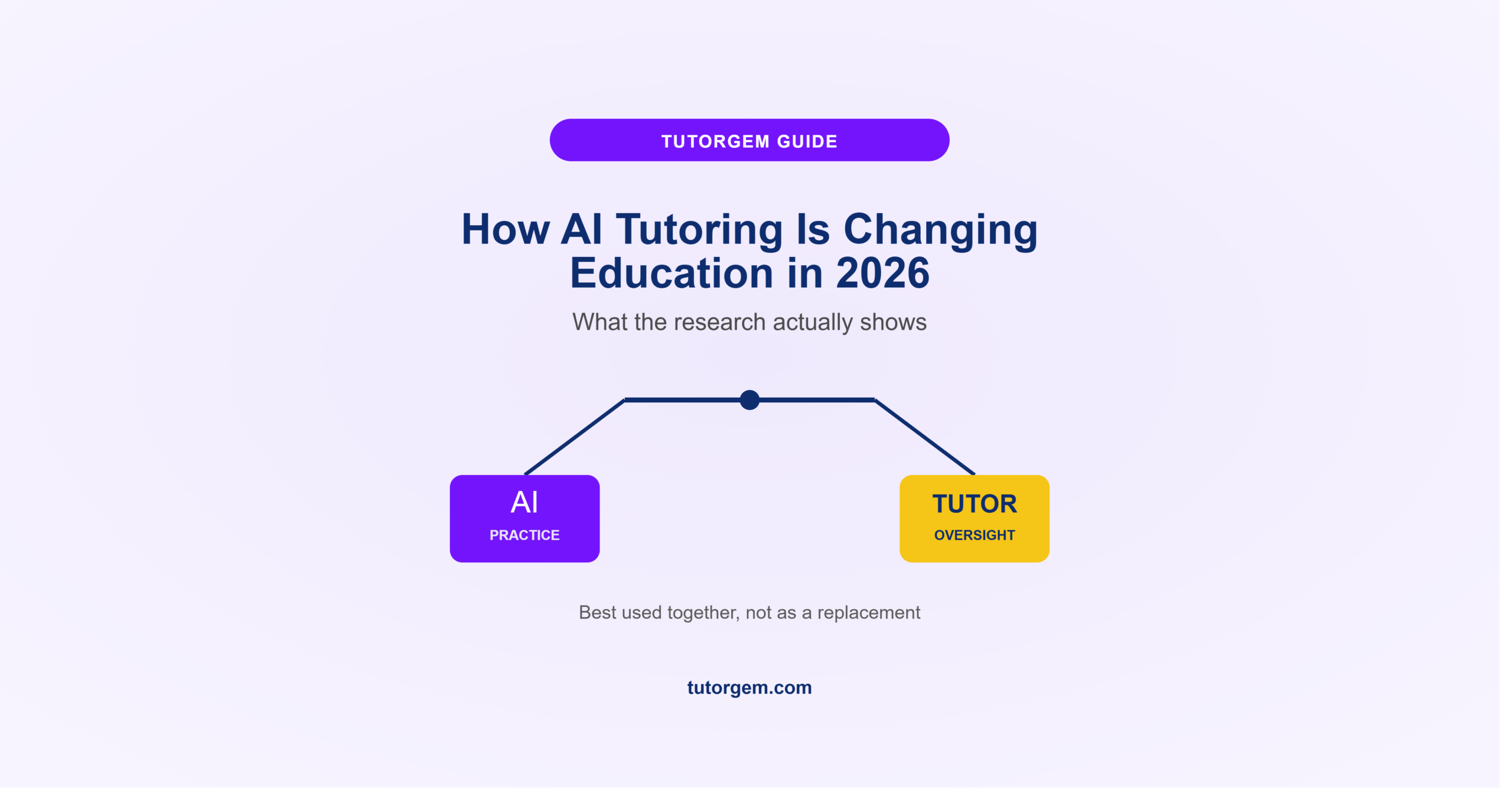
TutorGem’s AI tutor technology supports students with instant explanations and adaptive practice, while every session still includes real tutor oversight to catch the exact errors AI tools can quietly introduce.
This hybrid learning model reflects where AI tutoring in 2026 genuinely adds value, speeding up practice and reinforcement, while a qualified human tutor still verifies real understanding and closes gaps a chatbot alone would miss.
Frequently Asked Questions
Can AI tutoring in 2026 fully replace a human tutor?
Not yet. Research shows AI tutoring works best for reinforcing material already taught, while genuinely new or complex topics still benefit from human guidance and error checking.
Is AI tutoring reliable for subjects like chemistry and maths?
AI tools handle simple, well-defined questions reasonably well, but they can produce confidently wrong answers on multi-step problems, making human review important for these subjects.
Why do so many students use AI tools despite low confidence in them?
Convenience drives adoption faster than skill develops. Students use AI tutoring because it is instantly available, even while many admit they lack the training to use it effectively.
Does using AI tutoring in 2026 actually speed up learning?
Some research, including a 2025 Harvard physics study, found significantly faster learning gains with AI tutoring support, though results vary by subject and how the tool is used.
How can I combine AI tutoring with a real tutor effectively?
Use AI tools for extra practice and quick explanations, then have a tutor review your work regularly to catch errors and confirm genuine understanding.
AI tutoring in 2026 offers real, research backed benefits, but it works best alongside human guidance, not as a full replacement for it. If you have been relying on AI tools alone and want to confirm your understanding is actually correct, TutorGem’s experienced tutors can review your recent work this week and combine the best of both approaches.