Calculus for Beginners: A Simple Guide to Understanding It
New symbols. New rules. A whole new way of thinking. Calculus can feel like starting maths over from scratch.
That feeling is common. Calculus does think differently than algebra. Once the two core ideas click, the rest becomes far easier to follow.
This guide breaks calculus down for beginners. It builds understanding step by step, without skipping the basics that make everything else make sense.
Why Calculus Feels So Different From Other Maths
Algebra deals with fixed numbers and equations. Calculus deals with change. This shift confuses many students at first, since the questions themselves feel less concrete.
Calculus also builds directly on algebra skills learned years earlier. Any gap in that older foundation shows up quickly once calculus begins.
The Real Numbers Behind Calculus Struggles
Research from the University of Texas Dana Center shows that roughly 25 to 30 percent of college students fail their first calculus course nationally. This number has stayed high for decades, across many different universities.
This data matters for beginners. It shows that struggling with calculus at first is common, not a sign that the subject is beyond reach. Most failures trace back to weak preparation, not lack of ability.
Calculus for Beginners: The Two Core Ideas
Calculus for beginners really comes down to two central ideas. Everything else in the subject builds on these two concepts.
Derivatives, or the Rate of Change
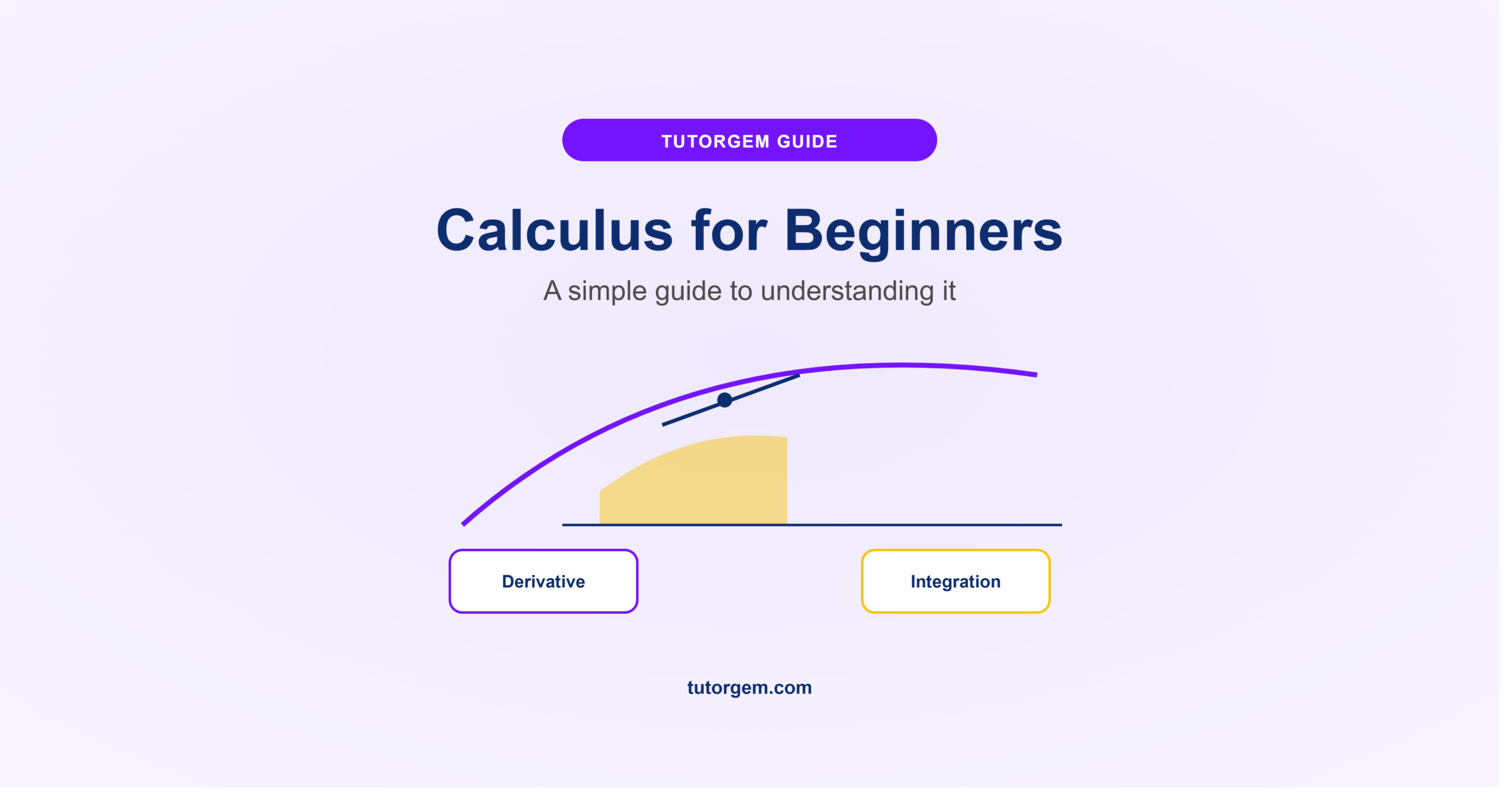
A derivative measures how fast something changes at a single moment. Speed is a simple example. It measures how fast position changes over time.
Understanding this idea in plain language first makes the formal rules, like the power rule or chain rule, feel like tools rather than random steps to memorize.
Integration, or Adding Up Small Pieces
Integration works almost like the reverse of a derivative. It adds up tiny pieces to find a total, like the total distance traveled from many small speed measurements.
Seeing integration as addition, rather than a mysterious symbol, removes much of the early confusion beginners feel.
Where Most Beginners Go Wrong
Many students jump straight into memorizing derivative and integration rules. This approach works briefly, then breaks down once questions get more complex.
Weak Algebra Hides Behind Every Calculus Mistake
Most calculus mistakes actually come from algebra errors, not calculus errors. A wrong sign or a poorly simplified fraction ruins an otherwise correct calculus method.
Reviewing algebra skills, especially factoring and fraction simplification, before starting calculus prevents most of these hidden mistakes from ever appearing.
A Real Case: Fixing the Foundation First
One TutorGem student struggled through weeks of calculus homework, convinced the subject was simply too hard for him. His tutor found the real issue during their first session together.
His algebra skills, particularly fraction simplification, were shaky. This weakness quietly sabotaged nearly every calculus problem he attempted, even when his calculus method itself was correct.
His tutor spent two sessions rebuilding these algebra basics before returning to calculus. His accuracy improved immediately, since the calculus method had been correct all along.
A Simple Beginner Roadmap for Calculus
Start with limits, the idea behind both derivatives and integration. Move to derivatives next, practicing simple functions before complex ones. Save integration for last, once derivatives feel comfortable.
Questions to Ask Before Moving to the Next Topic
Ask if you can explain the current topic in plain language, not just apply its formula. Ask if your algebra feels solid enough to support new calculus rules. These checks prevent gaps from compounding later.
How a Tutor Helps Calculus Click Faster
A tutor identifies exactly where understanding breaks down, often revealing an older algebra gap hiding behind a calculus mistake. This turns confusing self study into a clear, guided path forward.
TutorGem’s maths tutoring programmes build calculus for beginners around this exact approach, strengthening algebra foundations alongside new calculus concepts rather than treating them separately.
Frequently Asked Questions
Is calculus harder than algebra?
Calculus asks a different kind of question than algebra, focused on change and accumulation rather than fixed values, which is why many students find the initial shift challenging.
What should I learn before starting calculus?
Strong algebra skills, especially factoring, fractions, and functions, form the real foundation calculus depends on, more than any specific calculus topic itself.
What is the easiest way to understand derivatives?
Think of a derivative as a rate of change, like speed. This plain language version makes the formal rules feel logical instead of random.
Why do so many students fail their first calculus course?
National data shows failure rates around 25 to 30 percent, often linked to weak algebra preparation rather than the calculus content itself being unreasonably difficult.
Can a tutor really help with calculus for beginners specifically?
Yes. A tutor can identify whether a struggle comes from calculus itself or an older algebra gap, then address the real root cause directly.
Calculus for beginners becomes far less intimidating once the two core ideas, derivatives and integration, are understood in plain language first. If algebra gaps or confusing rules keep holding you back, TutorGem’s experienced maths tutors can pinpoint the real issue this week and build your understanding from a solid foundation up.