How to Improve English Writing Skills for Exams?
You have good ideas in your brain, but still suffering with weak marks in the exams. That gap is more common than you think.
Many students know exactly what they want to say. Getting it onto paper under exam pressure is a different skill entirely.
Learning how to improve English writing skills for exams comes down to structure and practice, not raw talent alone.
This guide breaks the process into clear, simple steps. It shows exactly where marks are lost and how to fix that before your next exam.
Why Writing Marks Slip Even When You Know the Content
Exam writing tests more than vocabulary and grammar. It tests planning, structure, and time management, all under real pressure.
Students who write well in relaxed settings often struggle when the clock is running. This gap explains why practice under real conditions matters so much.
What the 2025 Results Actually Show
According to 2025 results reported by Tes, the GCSE English language pass rate fell to 59.7 percent, down from 61.6 percent the previous year. This means more than four in ten students did not reach a standard pass in the subject.
This data confirms that English writing remains a genuine challenge for many students, not a subject where strong ideas alone guarantee a good grade.
How to Improve English Writing Skills Step by Step
Strong exam writing follows a clear, repeatable process. Skipping steps under time pressure is exactly where most marks disappear.
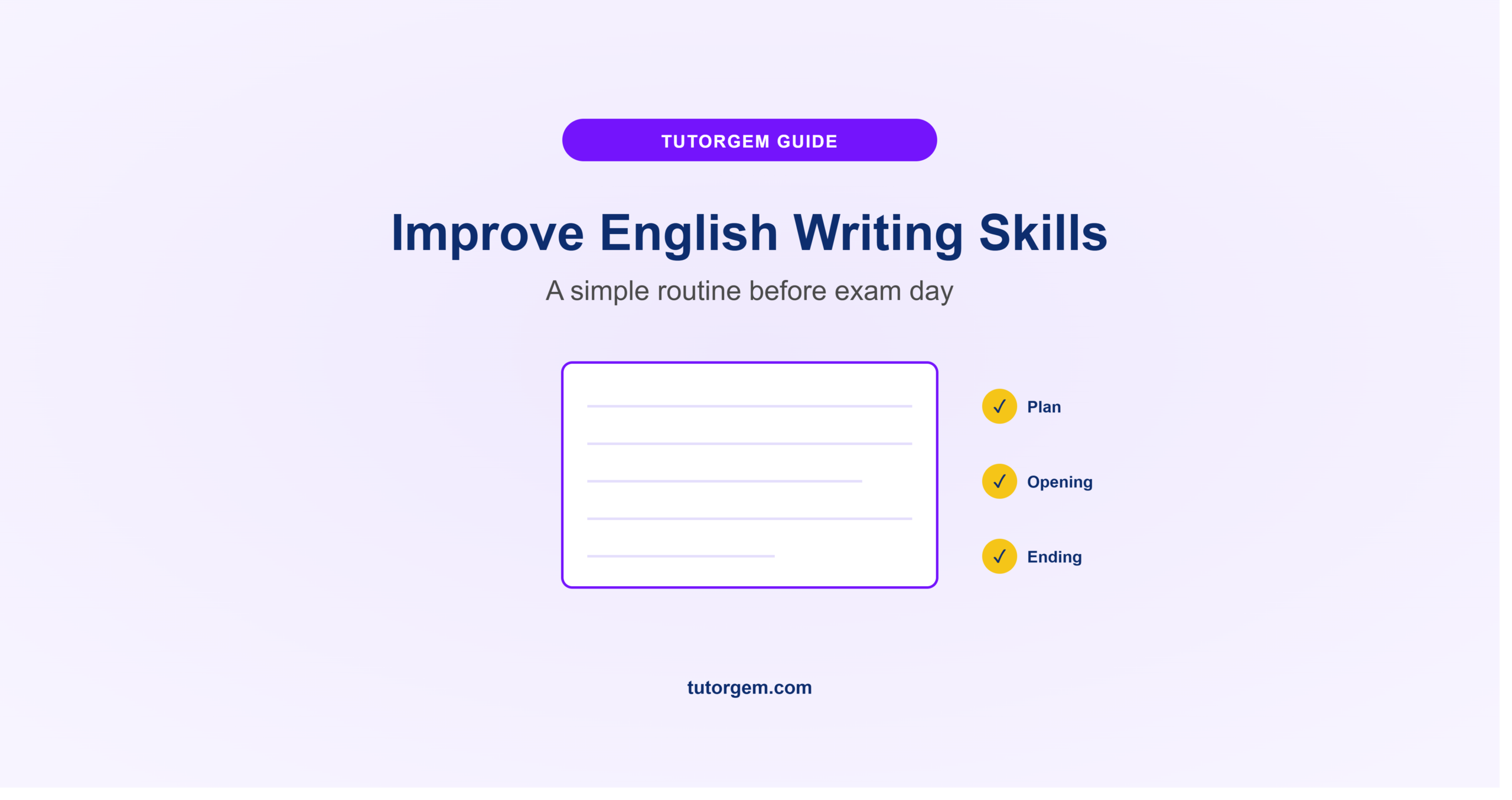
Plan Before You Write a Single Word
Spend the first few minutes planning, even when time feels tight. A short plan prevents wandering off topic halfway through your answer.
This single habit protects your structure. Examiners reward clear, organized writing far more than writing that starts strong and loses direction.
Vary Your Sentences on Purpose
Mixing short and long sentences keeps writing engaging and shows real control over language. Repeating the same sentence length throughout an answer reads as flat, even when the ideas are strong.
Reading your practice writing aloud reveals this pattern quickly. Repetitive rhythm becomes obvious the moment you hear it.
Common Writing Mistakes That Cost Easy Marks
Some mistakes repeat constantly across student writing, regardless of ability level. Spotting them early saves real marks.
| Common Mistake | Why It Costs Marks | Simple Fix |
|---|---|---|
| No clear plan | Answer drifts off topic | Spend 2 to 3 minutes planning first |
| Weak opening line | Fails to grab examiner attention | Start with a strong, specific image or idea |
| Repetitive sentence length | Reads as flat and unengaging | Mix short and long sentences deliberately |
| Rushed ending | Answer feels incomplete | Save time to write a clear final paragraph |
| Overused vocabulary | Limits range and impact | Build a small bank of varied, precise words |
Weak Openings and Rushed Endings
The first and last lines of any piece leave the strongest impression on an examiner. A flat opening line signals weak control from the very start.
Rushed endings happen when time management fails earlier in the answer. Protecting a few minutes for a proper conclusion avoids this common, easily fixed mistake.
A Real Case: Same Ideas, Better Structure
One TutorGem student consistently had strong, creative ideas in her English writing but scored below average on structure marks. Her ideas were never the problem.
Her tutor introduced a simple five minute planning step before every practice piece. This single change organized her strong ideas into a clear, logical structure examiners could follow easily.
Within four practice sessions, her structure marks rose noticeably, while her actual content barely changed. The improvement came entirely from organization, not new ideas.
A Simple Practice Routine Before Exam Day
Practice one full timed piece each week, always under real exam time limits. Review it the same day, focusing specifically on structure and sentence variety.
Questions to Ask After Every Practice Piece
Ask if your opening line would grab a stranger’s attention. Ask if your sentences all sound the same length when read aloud. These two checks catch the most common repeat mistakes.
How a Tutor Sharpens Exam Writing Fast
A tutor reviews your actual writing, spotting patterns that are hard to notice in your own work. This turns vague feedback like “needs more detail” into a specific, fixable plan.
TutorGem’s English tutoring programmes build structure and technique directly into every writing session, helping students turn strong ideas into strong exam marks.
Frequently Asked Questions
How can I improve my English writing skills quickly before an exam?
Focus on planning and sentence variety first, since these two areas produce the fastest, most visible improvement in a short amount of time.
Why do I lose marks even when my ideas are good?
Examiners mark structure and technique alongside content. Strong ideas without clear organization often score lower than expected, regardless of creativity.
How long should I plan before writing in an exam?
Two to three minutes of planning is usually enough to organize a clear structure, without eating too far into your actual writing time.
Does reading my writing aloud actually help?
Yes. Reading aloud reveals repetitive sentence rhythm and awkward phrasing far more clearly than silent reading does.
Can a tutor help improve English writing skills specifically for exams?
Yes. A tutor reviews your actual writing samples and identifies exact patterns holding back your marks, rather than offering general advice alone.
Learning how to improve English writing skills for exams comes down to structure, planning, and honest review of your own patterns. If your ideas feel strong but your marks do not reflect that, TutorGem’s experienced English tutors can review your writing this week and show you exactly where those marks are slipping away.