GCSE Biology: Key Topics Every Student Must Master
So many topics. So little time before the exam. Where do you even begin with biology?
This feeling is common. Biology covers more separate topics than most other GCSE subjects. Trying to revise everything equally often means mastering nothing well.
This guide breaks down the GCSE biology key topics that matter most. It shows exactly where to focus your limited revision time.
Why Biology Feels Bigger Than Other GCSE Sciences
Biology spans everything from cells to ecosystems. This range makes the subject feel scattered compared to the tighter focus of chemistry or physics.
Many students respond by trying to memorize everything equally. This spreads effort too thin across topics that carry very different amounts of exam weight.
What the 2025 Results Actually Show
According to 2025 national exam data, 89.4 percent of GCSE biology entries achieved a grade 4 or above, while 43.5 percent reached the top grades of 7 or higher. These figures place biology among the stronger performing sciences at GCSE level.
This data shows that solid results are achievable with the right focus. It also confirms that biology rewards students who prioritize well, not just those who revise the longest hours.
The GCSE Biology Key Topics You Cannot Skip
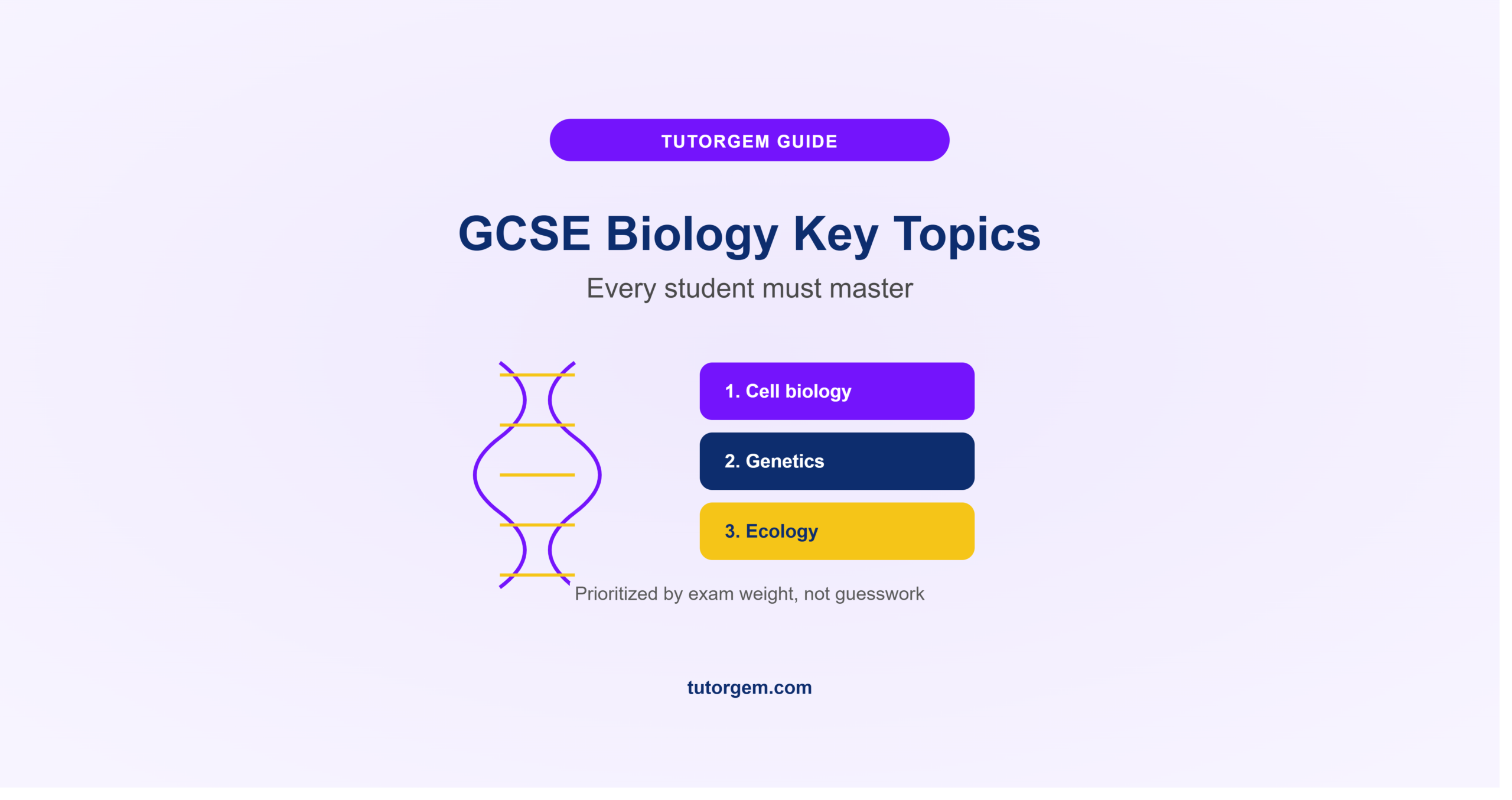
A handful of core topics appear across almost every exam paper, regardless of exam board. Mastering these first builds a strong foundation for everything else.
Cell Biology and Organisation
Cell structure, division, and transport appear in nearly every biology paper in some form. This topic also underpins later units, like genetics and disease, making it essential early groundwork.
Students who understand cell biology deeply tend to grasp later topics faster, since so much of the subject builds directly on these basic structures.
Genetics, Evolution, and Ecology
Genetics questions often combine inheritance diagrams with written explanation, testing both calculation and understanding together. Evolution and ecology questions frequently ask students to interpret data from graphs or field studies.
These topics reward practice with real exam-style questions, since the skill of reading and interpreting biological data matters as much as raw content knowledge.
Where Students Lose Marks Without Realizing It
Some of the easiest marks to lose have nothing to do with content knowledge. They come from misreading questions or skipping practical based skills entirely.
Required Practicals Count More Than You Think
Every GCSE biology specification includes required practicals, and exam questions test understanding of these methods directly. Students who treat practicals as a classroom formality often lose marks they could have secured easily.
Reviewing the method, variables, and possible errors for each required practical closes this gap quickly, since these questions follow predictable patterns across exam boards.
A Real Case: Fewer Topics, Better Focus
One TutorGem student tried to revise all of GCSE biology equally in the final month before exams, spreading limited time across every single topic without any real priority.
Her tutor built a focused list of the highest weighted topics, starting with cell biology and genetics, based on how often these appeared across past exam papers. This narrowed her revision without leaving real gaps.
Her final grade rose from a 5 to a 7, driven largely by deeper mastery of fewer, better chosen topics rather than shallow coverage of everything at once.
A Simple Way to Prioritize Your Revision
Rank topics by how often they appear across past papers, not by personal preference or how interesting they feel. This single shift changes revision from guesswork into a clear plan.
Questions to Ask About Every Topic
Ask how often this topic appears across recent exam papers. Ask whether it connects to other topics you still need to revise. These two questions reveal which GCSE biology key topics deserve your limited time most.
How a Tutor Helps You Master These Topics Faster
A tutor identifies exactly which topics carry the most exam weight for your specific board, cutting through the guesswork of deciding where to focus.
TutorGem’s biology tutoring programmes build revision plans around these exact priorities, helping students master the highest value topics instead of spreading effort too thin across the whole specification.
Frequently Asked Questions
What are the most important GCSE biology key topics to revise first?
Cell biology, genetics, and required practicals carry consistent weight across most exam boards and form the foundation many later topics depend on.
How many required practicals appear in GCSE biology?
Most exam boards include around eight required practicals, and questions testing their methods and results appear regularly across written papers.
Is GCSE biology easier than chemistry or physics?
Biology generally involves less calculation than chemistry or physics, though it demands strong recall across a wider range of separate topics.
How should I prioritize revision with limited time before exams?
Focus first on topics that appear most often in past papers, since this approach covers the highest proportion of likely exam content efficiently.
Can a tutor help me focus on the right biology topics?
Yes. A tutor can identify which topics carry the most weight for your specific exam board, saving valuable revision time compared to studying everything equally.
Mastering the GCSE biology key topics that matter most turns overwhelming revision into a clear, focused plan. If your revision feels scattered across too many topics at once, TutorGem’s experienced biology tutors can help you prioritize this week and build real understanding where it counts most.