How to Motivate a Child Who Hates Studying
Bribes stopped working months ago. Threats only cause tears or slammed doors. Sound familiar?
Most quick fixes for motivation fail because they rely on outside pressure, not genuine interest. Learning how to motivate a child who hates studying means building the real conditions for motivation, not just finding a bigger reward or a stricter rule.
This guide breaks down what decades of psychological research actually says works, and shows how to apply it at home starting this week.
Why Rewards and Threats Rarely Work Long Term
Bribing or threatening a child into studying can produce short bursts of effort, but this approach rarely builds the lasting motivation parents actually want to see.
What Decades of Motivation Research Actually Show
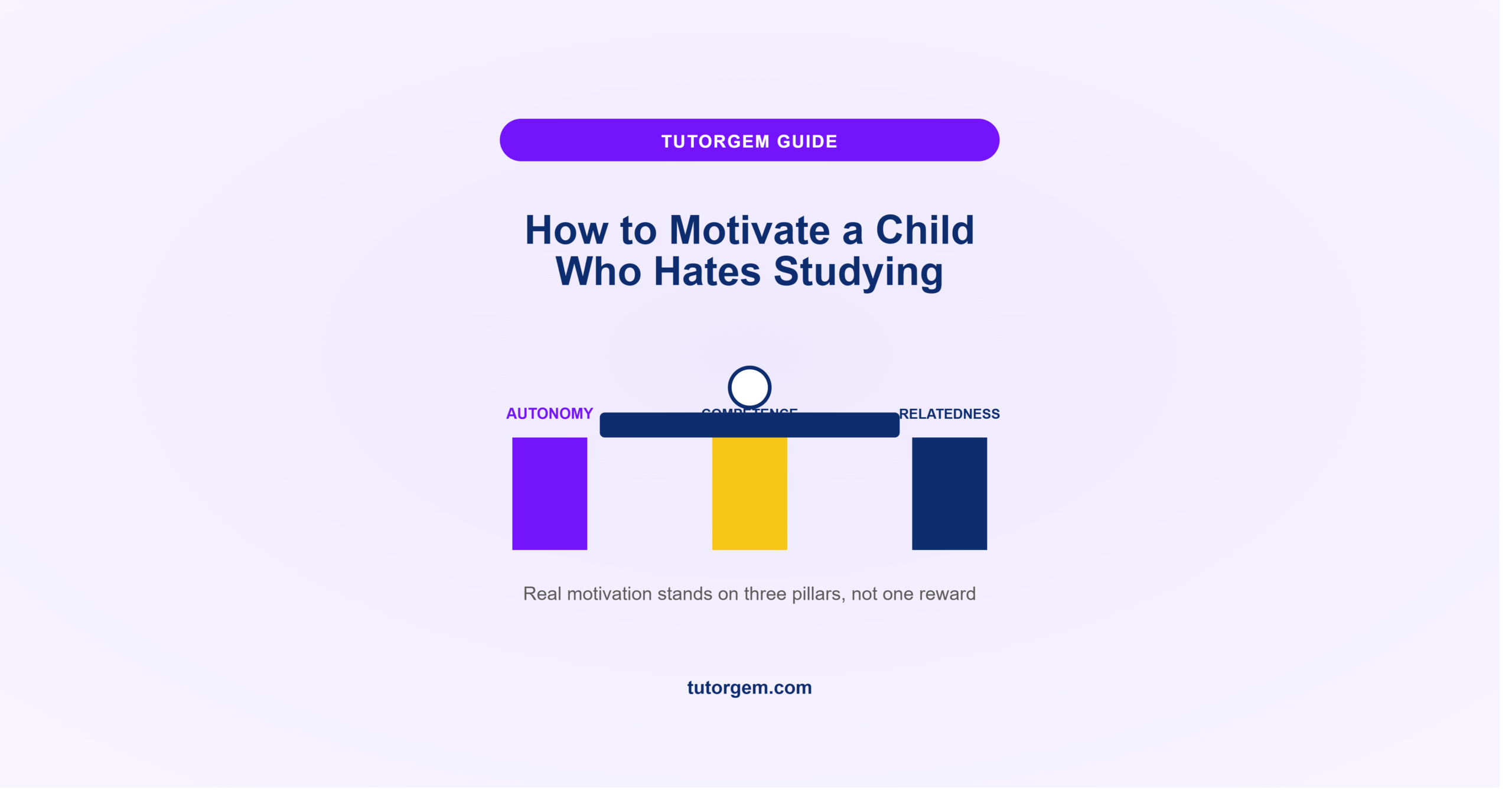
Self-Determination Theory, developed by psychologists Ryan and Deci, identifies three basic psychological needs that drive genuine motivation, autonomy, competence, and relatedness. A well-known longitudinal study found that intrinsic motivation was the only type of motivation to significantly predict academic performance a full year later, even after accounting for a student’s starting ability.
This research matters directly for parents. Learning how to motivate a child who hates studying means building these three conditions, not simply offering a bigger reward for the next test.
How to Motivate a Child Who Hates Studying, Using Real Psychology
Each of the three psychological needs identified by this research translates into something concrete parents can actually do at home.
Autonomy: Giving Some Control Back
Children who feel forced into every study decision often resist simply because the choice was never theirs. Offering small, genuine choices, like which subject to start with tonight, or whether to study at the desk or the kitchen table, restores a sense of control without giving up structure entirely.
| Psychological Need | What It Looks Like at Home | Common Mistake |
|---|---|---|
| Autonomy | Letting your child choose study order or method | Dictating every detail of how to study |
| Competence | Breaking tasks into achievable steps | Assigning work far above current ability |
| Relatedness | Studying alongside or checking in warmly | Treating study time as pure supervision |
Competence: Building Small, Real Wins
A child who consistently feels behind or overwhelmed often stops trying altogether, since repeated failure erodes motivation faster than almost anything else. Breaking a large task into smaller, genuinely achievable steps lets a child experience real competence regularly, rebuilding confidence one small win at a time.
The Third Piece Most Parents Miss
Autonomy and competence get discussed often, but the third need, relatedness, plays an equally important role in genuine motivation.
Relatedness Means Connection, Not Just Supervision
A child who feels genuinely supported, rather than merely monitored, engages far more willingly with difficult material. Sitting nearby during study time, without hovering over every answer, or simply asking with real curiosity what they are learning, builds this sense of connection without adding pressure.
A Real Case: From Forced Sessions to Genuine Interest
One TutorGem family described nightly battles over maths homework with their son, who openly said he hated studying and resisted every session despite consequences and rewards being tried repeatedly.
His tutor started by letting him choose which topic to tackle first each session, then broke difficult problems into smaller steps he could genuinely complete successfully. Within a few weeks, his resistance eased noticeably, since he was experiencing real competence rather than repeated frustration.
This case reflects the research closely. Learning how to motivate a child who hates studying rarely means finding the right reward. It means rebuilding the conditions that make effort feel worthwhile in the first place.
A Simple Way to Apply This at Home
Offer one genuine choice at the start of every study session, even something small, before deciding anything else about how the session will run.
Questions to Ask Before Offering Another Reward
Ask whether your child feels any real control over how they study, or whether every decision is currently made for them. Ask whether recent tasks have felt achievable, or consistently overwhelming, since this shapes willingness to try far more than any reward could.
How a Tutor Builds Genuine Motivation, Not Just Compliance
A tutor structures sessions around achievable steps and genuine choice, building the exact psychological conditions research shows drive lasting motivation, rather than short term compliance through rewards alone.
TutorGem’s tutoring for younger learners is built specifically around this approach, pairing patient, encouraging teaching with small, genuinely achievable wins that rebuild a child’s confidence step by step.
Frequently Asked Questions
Do rewards ever work for motivating a child to study?
Rewards can produce short term compliance, but research consistently shows they rarely build lasting motivation compared to genuine autonomy, competence, and connection.
What is Self-Determination Theory in simple terms?
It is a well-established psychological framework showing that people feel genuinely motivated when three needs are met, a sense of control, a sense of real progress, and a sense of connection with others.
How can I give my child more autonomy without losing structure?
Offer small, genuine choices within a structure you still control, like letting your child pick which subject to start with, while the overall study schedule stays consistent.
Why does my child give up quickly when work feels too hard?
Repeated failure erodes motivation faster than almost anything else, so breaking tasks into smaller, genuinely achievable steps helps rebuild the sense of competence needed to keep trying.
Can a tutor help when a child says they hate studying entirely?
Yes. A tutor experienced in building genuine confidence, rather than relying on rewards or pressure, can often shift a child’s relationship with studying within a few structured sessions.
Learning how to motivate a child who hates studying comes down to real psychological needs, not a better bribe or a stricter rule. If study time at home has become a daily battle, TutorGem’s experienced tutors can help rebuild your child’s sense of genuine progress, one achievable step at a time.