Coding for Kids: Why Python Is a Great First Language
Parents mostly look for what to start to their child to understand fundamentals of computer? Many parents reach this exact moment without knowing where to go next.
Coding for kids genuinely has a clear next step once block-based tools feel too limiting. Python consistently comes up as the recommended first real programming language, and understanding exactly why helps parents make that transition with confidence.
This guide explains why Python suits young learners so well, how to tell when a child is ready for it, and how to introduce it without the excitement turning into frustration.
Why So Many Parents Start the Coding Conversation With Scratch
Scratch remains an excellent starting point for coding for kids, using drag-and-drop blocks that let children build simple games and animations without typing a single line of code.
When a Child Is Ready to Move Beyond Blocks
Most children eventually reach the limits of what block-based tools can build, wanting features or complexity that Scratch simply cannot support. This moment, often somewhere between ages nine and twelve, signals genuine readiness for a text-based language rather than a reason to stop coding altogether.
Coding for Kids: Why Python Specifically Works So Well
Among text-based languages, Python stands out as the most commonly recommended first choice for young learners transitioning from block-based tools.
Simple Syntax That Reads Almost Like English
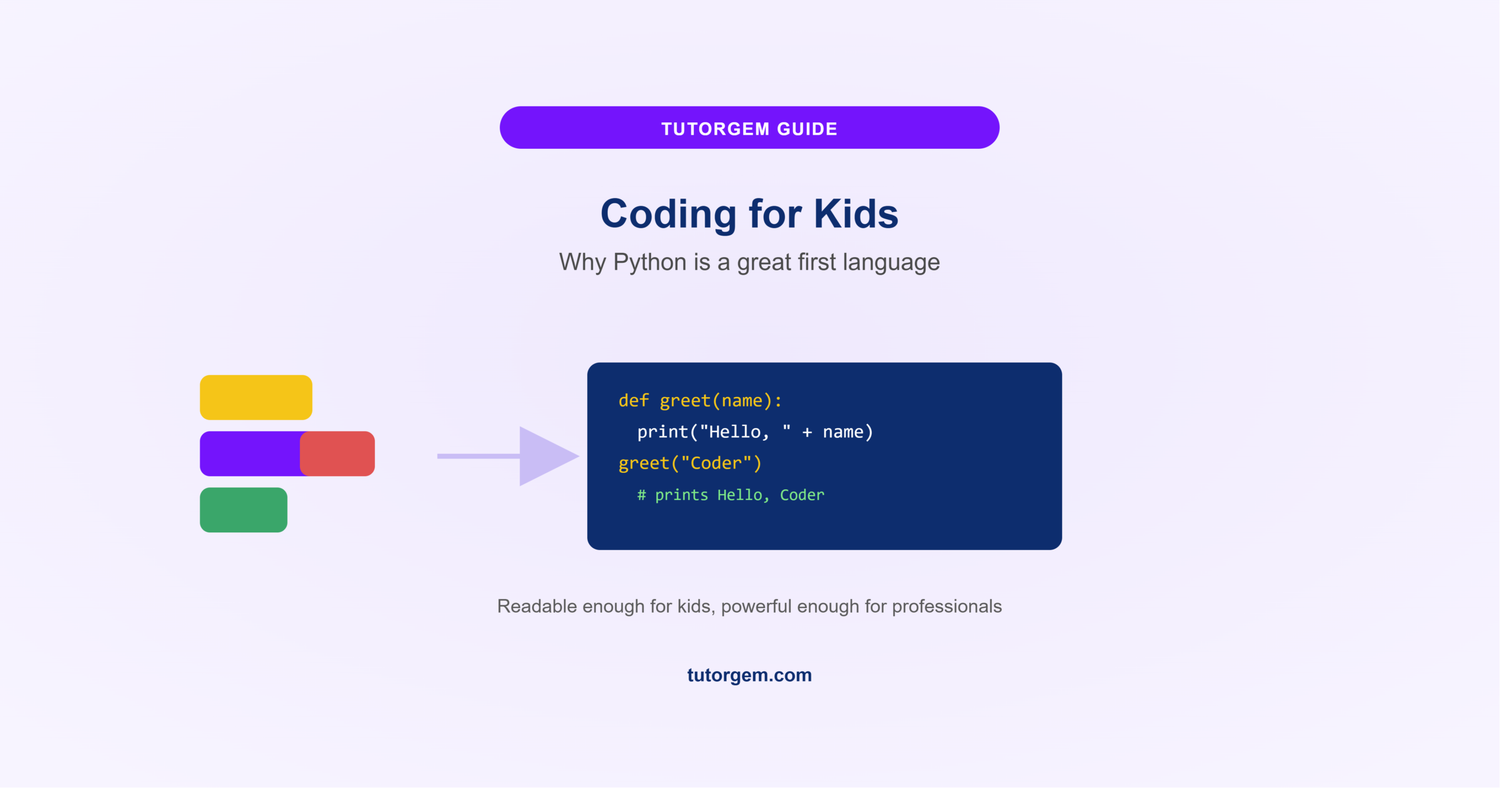
Python’s rules are simple enough for children as young as nine or ten to learn, since its syntax reads closer to plain English than many other programming languages. This readability means kids spend less time fighting confusing symbols and more time actually building things.
| Feature | Scratch | Python |
|---|---|---|
| Format | Drag-and-drop blocks | Typed text commands |
| Best for | Complete beginners, younger children | Kids ready for real code |
| Typical age to start | 5 to 8 | 9 to 12 and up |
| What it builds | Simple games, animations | Games, websites, real applications |
| Used professionally | No | Yes, widely used in industry |
Real Projects Kids Actually Want to Build
Python lets kids build genuinely engaging projects, simple games, drawing programs using built-in graphics tools, and basic animations, giving coding for kids a real sense of achievement beyond abstract exercises. This motivation matters more than any theoretical argument about why a language is good to learn.
Scratch vs Python: Choosing the Right Starting Point
Neither tool is universally better. The right starting point depends entirely on a child’s current comfort level and coding experience so far.
Signs Your Child Has Outgrown Block-Based Coding
Watch for a child expressing frustration that Scratch cannot do something they want, or showing curiosity about how real apps and games actually get built. These signs suggest genuine readiness for Python, rather than moving on purely because of age alone.
A Real Case: From Scratch Animations to a Working Game
One TutorGem student had built several simple animations in Scratch over two years, but increasingly asked his tutor why professional games looked so different from his projects.
His tutor introduced Python gradually, starting with a simple text-based number guessing game before building toward more visual projects using Python’s graphics tools. Within a few months, he had built a basic working game entirely in Python, a milestone that visibly boosted his confidence and interest in continuing.
This case reflects a common pattern in coding for kids. The right timing, tied to genuine curiosity rather than a fixed age, makes the transition feel exciting rather than overwhelming.
How to Introduce Python Without Overwhelming a Child
Start with small, achievable projects rather than formal lessons on programming theory, since early wins build the motivation needed to push through inevitable early frustration.
Questions to Ask Before Starting Python Lessons
Ask whether your child has expressed genuine interest in what happens “behind” a Scratch project. Ask whether they enjoy problem-solving in general, since this mindset transfers directly into early coding for kids success.
How a Tutor Makes the Jump to Python Easier
A tutor structures the transition from Scratch to Python around a child’s specific interests, catching frustration early before it turns into genuine discouragement.
TutorGem’s Python tutoring and kids tutoring programmes guide young learners through this exact transition, building real, motivating projects from the very first lessons rather than starting with abstract programming theory.
Frequently Asked Questions
At what age should a child start learning Python specifically?
Most children are ready somewhere between ages nine and twelve, though genuine readiness depends more on prior coding experience and curiosity than age alone.
Should my child master Scratch completely before starting Python?
Not necessarily. A child expressing genuine frustration with Scratch’s limits often signals readiness, even without having mastered every feature of the block-based tool first.
Is Python too difficult for a young child to learn?
No. Python was specifically designed with simple, readable syntax, making it one of the more accessible first programming languages for children as young as nine or ten.
What can kids actually build with Python?
Young learners commonly build simple games, drawing programs, and basic animations using Python’s built-in graphics tools, giving coding for kids real, motivating early projects.
Can a tutor help my child transition from Scratch to Python smoothly?
Yes. A tutor can pace the transition around a child’s specific interests and comfort level, preventing the frustration that sometimes comes with jumping into text-based coding too quickly.
Coding for kids reaches a natural turning point once block-based tools start feeling limiting, and Python offers a genuinely accessible next step. If your child has outgrown Scratch and shown real curiosity about coding, TutorGem’s experienced tutors can guide that transition this week, starting with a project your child actually wants to build.