What Universities Look for Beyond Grades: An A-Level Student’s Guide
Predicted grades look strong. Application still feels thin. This gap catches many capable students off guard.
Universities genuinely look at more than exam results, and knowing what universities look for beyond grades early gives you time to build real evidence, not scramble for it in the final weeks before applying.
This guide breaks down exactly what admissions teams want to see, including a major format change affecting every UK applicant from 2026 entry onward.
Why Grades Alone No Longer Tell the Full Story
Competitive courses receive far more strong-grade applicants than available places, forcing admissions teams to look for genuine differences beyond predicted results alone.
The Big Change Reshaping UK Applications in 2026
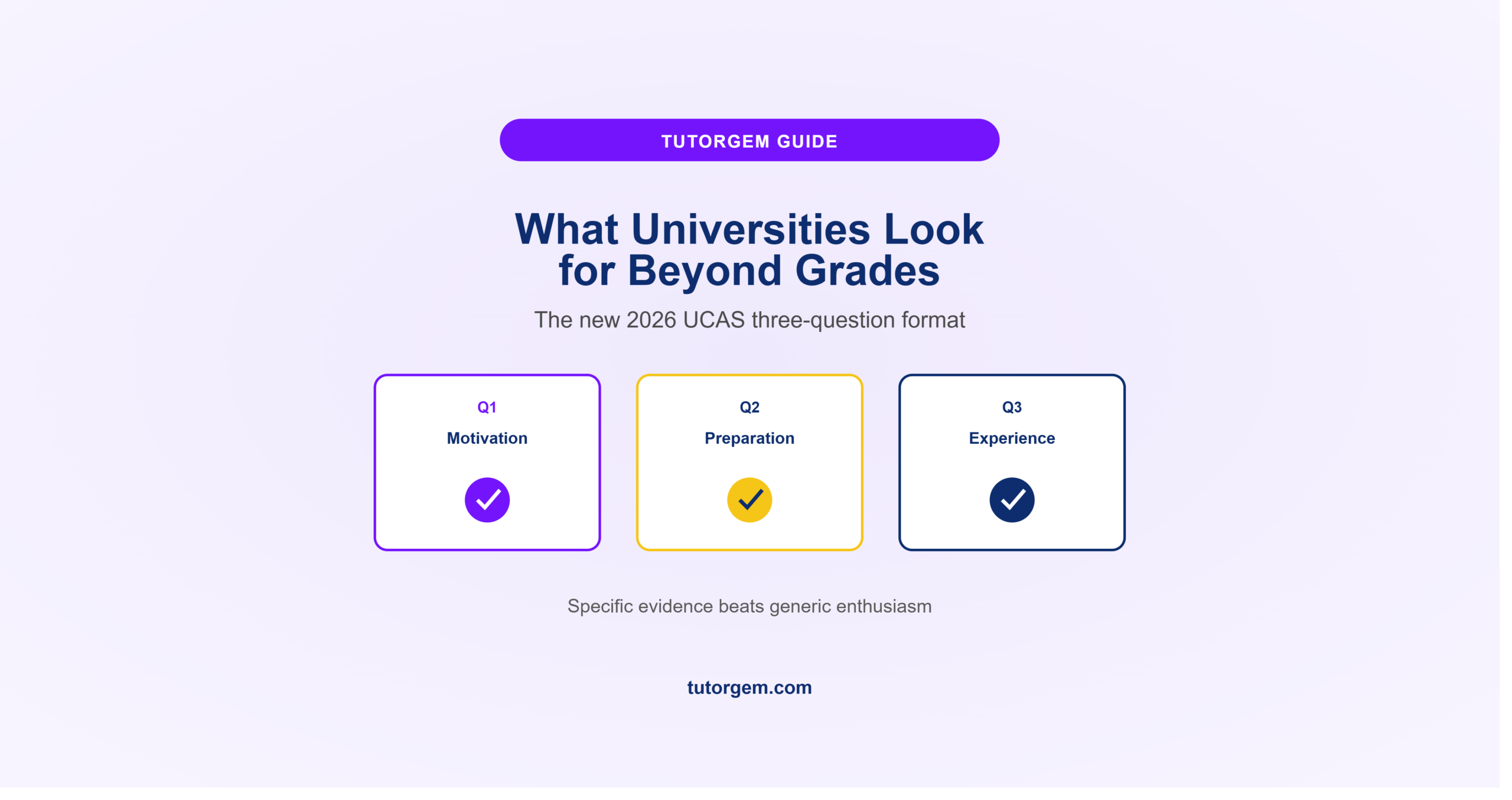
Starting with 2026 entry, UCAS replaced the traditional single 4,000-character personal statement essay with three separate structured questions, each requiring a minimum of 350 characters. This change directly affects how students should prepare, since admissions tutors now read each answer as its own focused response rather than one flowing narrative.
This shift matters because it removes the option of vague, general enthusiasm spread across a long essay. Each of the three questions now demands specific, concrete evidence on its own.
What Universities Look for Beyond Grades
Beyond academic results, admissions teams consistently look for genuine subject interest, relevant preparation, and evidence of independent thinking outside the classroom.
Genuine Subject Interest Over Generic Enthusiasm
Admissions tutors read thousands of applications claiming a passion for a subject. What actually stands out is specific evidence, a particular book, project, or experience that shaped genuine interest, rather than broad statements that could apply to any applicant.
Students who can explain exactly why a specific aspect of a subject interests them consistently stand out more than those relying on general phrases like “I have always loved science.”
Super-Curricular Activities vs Extracurricular Activities
Super-curricular activities extend directly from academic subjects, like attending a related online lecture series or reading beyond the set curriculum. Extracurricular activities, like sports or part-time work, show broader character but carry less weight for subject-specific admissions decisions.
| Question Focus | What It Asks | What Universities Want to See |
|---|---|---|
| Motivation for the course | Why this subject specifically | Genuine, specific interest, not generic passion |
| Preparation through study | How your qualifications prepared you | Concrete examples from coursework or projects |
| Experience outside education | What you have done beyond the classroom | Relevant activities showing initiative and depth |
How the New UCAS Format Changes What You Should Prepare
The three-question format means students can no longer rely on one strong paragraph to compensate for a weaker section elsewhere. Each answer needs its own solid evidence.
Answering Each Question With Real Substance
Treat each of the three questions as a self-contained answer rather than one continuous essay split into parts, since admissions tutors read them individually. Weak answers in any single section can undermine an otherwise strong application, even if the other two questions are excellent.
A Real Case: Strong Grades, Weak Application
One TutorGem student held predicted A grades across all three A-level subjects but received no offers from his first choice universities the previous application cycle. His personal statement read as generic, listing subjects he enjoyed without any specific evidence behind the claims.
His tutor helped him identify concrete examples from his coursework and a related online course he had genuinely completed, then structured these into focused, specific answers rather than vague statements. His reapplication the following year, using far more specific evidence, resulted in offers from two of his original target universities.
This case reflects exactly what universities look for beyond grades. Genuine, specific evidence consistently outperforms strong predicted grades paired with a generic application.
Building Evidence Early, Not the Week Before Applying
Genuine super-curricular evidence takes months to build honestly, since admissions tutors can usually tell the difference between real, sustained interest and activities completed hastily right before applying.
Questions to Ask Yourself This Year
Ask what specific book, project, or experience genuinely shaped your interest in your chosen subject. Ask what you have actually done recently that goes beyond your set coursework, even something small and specific.
How a Tutor Supports the Whole Application, Not Just Grades
A tutor helps identify genuine super-curricular activities relevant to a specific subject, then helps structure that evidence clearly across the new three-question UCAS format.
TutorGem’s A-level tutoring support goes beyond exam content, helping students build the kind of genuine subject depth that strengthens university applications well before the final UCAS deadline arrives.
Frequently Asked Questions
When did the UCAS personal statement change to three questions?
The new three-question format applies to applications submitted from September 2025 onwards, affecting students applying for 2026 entry and beyond.
What is the difference between super-curricular and extracurricular activities?
Super-curricular activities extend directly from an academic subject, like related reading or online courses, while extracurricular activities like sports show broader character but carry less weight for subject-specific admissions.
How specific should evidence be in a personal statement?
Very specific. A particular book, project, or experience that shaped genuine interest stands out far more than broad, general statements that could apply to any applicant.
Can I still write a personal statement as one long essay under the new format?
No. From 2026 entry, applicants must answer three distinct questions separately, each read individually by admissions tutors, rather than submitting one continuous essay.
How early should I start building evidence for university applications?
Starting during Year 12, well before the application deadline, gives genuine time to build real super-curricular evidence rather than scrambling for activities in the final weeks.
Understanding what universities look for beyond grades gives A-level students real time to build genuine, specific evidence rather than a rushed, generic application. If your predicted grades are strong but your wider preparation feels thin, TutorGem’s experienced tutors can help you identify and structure the subject depth admissions teams actually want to see.