ESL Tutoring Guide: How Language Support Actually Works
Stuck between grammar apps and real conversation practice? Many learners try both. Progress still feels slow.
The gap often comes from missing one thing. Real, structured feedback from a person. A clear ESL tutoring guide fixes that gap fast.
This guide explains what ESL tutoring actually involves. It shows who benefits most. It also helps you pick the right kind of support.
What ESL Tutoring Actually Means
ESL stands for English as a Second Language. It describes support for learners who speak another language first. The goal is clear, practical English for daily life, school, or work.
Good ESL tutoring is not the same as a school English class. It targets one learner’s exact gaps. It moves at their pace, not a group pace.
ESL vs EFL vs Regular Language Classes
ESL usually applies to learners living in an English speaking country. EFL, or English as a Foreign Language, applies to learners studying English while living elsewhere. Regular language classes often mix both types of learners together.
This difference matters for tutoring. An ESL tutor often focuses on daily conversation and school integration. An EFL tutor may focus more on exams and written skills instead.
How an ESL Tutoring Guide Helps You Choose the Right Support
Not every learner needs the same kind of help. Some need speaking confidence. Others need grammar accuracy for exams. A good ESL tutoring guide starts by identifying which gap matters most.
Signs a Learner Needs One on One Help
Watch for these common signs. A learner understands English but struggles to speak it. Group classes move too fast or too slow for them. They avoid speaking up in class discussions.
Each of these signs points to the same fix. Personal, focused practice. Not more general classroom time.
What a Good ESL Session Looks Like
A strong session mixes speaking practice with real correction. The tutor listens first. They then explain the exact mistake, not just the right answer.
Sessions should also build vocabulary tied to real situations. School, work, or daily errands. This makes new words stick faster than random word lists.
Why Demand for ESL Tutoring Keeps Growing
English learning has grown into a massive global need. This growth touches school systems, workplaces, and families moving between countries.
What the Global Data Shows
According to the British Council, close to 1.9 billion people around the world are learning or using English as an additional language. The global English learning market is expected to reach 69.62 billion dollars by 2029.
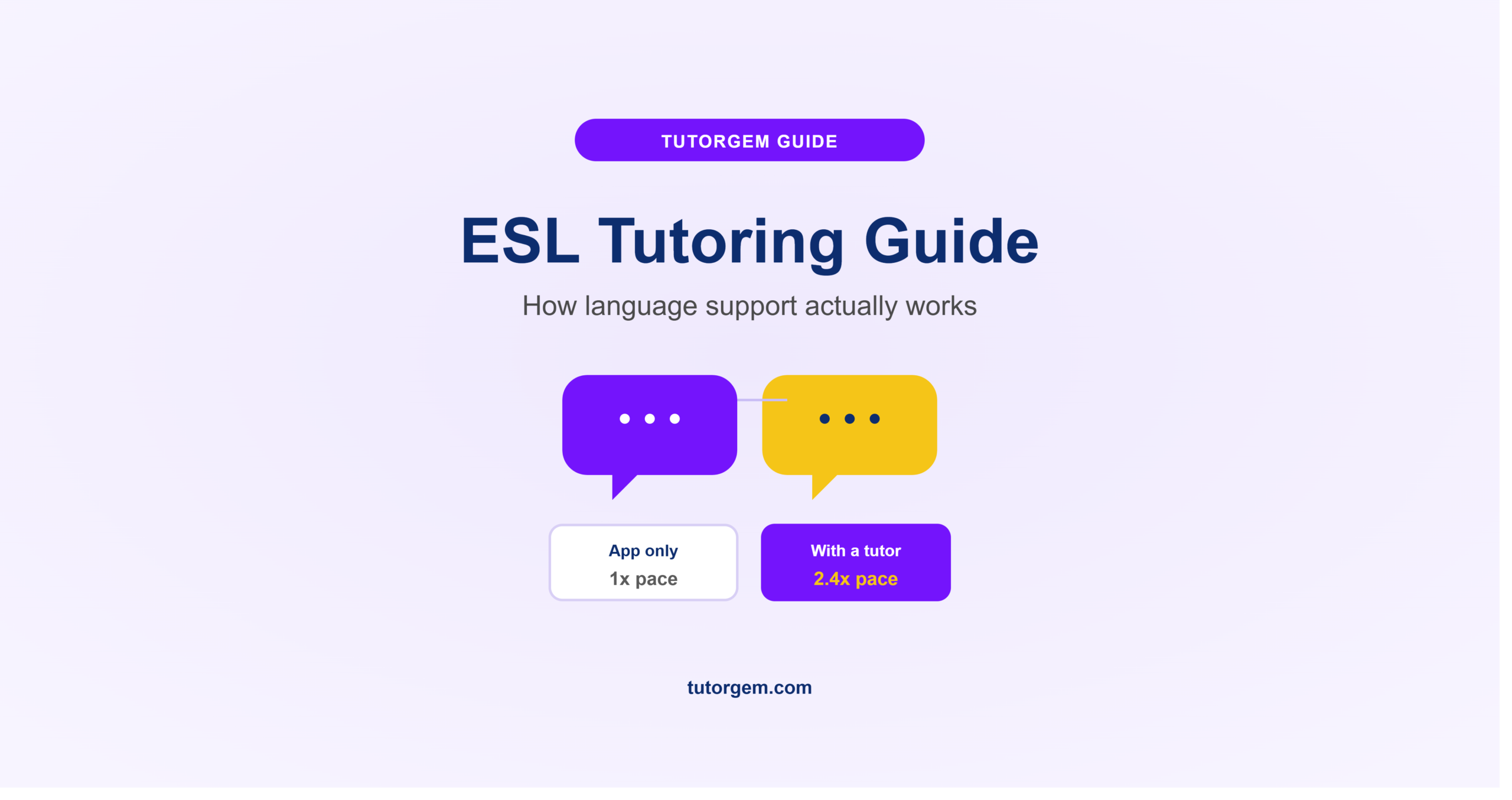
Research also shows a clear benefit from human support. Learners who pair self study apps with a real tutor progress roughly 2.4 times faster than those using apps alone. This gap explains why structured ESL tutoring keeps growing, even as free apps become more common.
A Real Case: Building Confidence Before an Exam
One TutorGem student had strong written English. Speaking out loud was different. She froze during mock interview practice for a university application.
Her tutor built short, low pressure speaking drills into every session. They focused on common interview questions first. Within six weeks, she spoke clearly and answered without long pauses.
Her final interview went well. She credited the shift to regular speaking practice, not grammar review alone.
Choosing Between an ESL Tutor and a General Language Tutor
An ESL tutor focuses only on English. A general language tutor may teach several languages, including English as one option among many.
Questions to Ask Before You Start
Ask if the tutor has direct experience with ESL learners specifically. Ask how they measure progress over time. Also ask whether sessions focus more on speaking, writing, or exam skills, since your goal should match their teaching style.
How TutorGem Supports ESL and Language Learners
TutorGem’s English tutoring programmes include dedicated ESL support for learners who need extra speaking and confidence building alongside standard grammar and writing lessons. This fits students preparing for school entry, exams, or everyday communication in English.
Tutors match each learner’s exact goal, whether that means passing a school English test or simply speaking with more confidence at work or school.
Frequently Asked Questions
What is the difference between ESL and EFL tutoring?
ESL usually supports learners living in an English speaking country. EFL supports learners studying English while living in a country where it is not the main language.
How long does it take to see progress with ESL tutoring?
Many learners notice real speaking confidence within six to eight weeks of consistent, weekly sessions.
Can ESL tutoring help with school exams too?
Yes. A good ESL tutor can shift focus toward exam skills, including reading comprehension and written English, once basic confidence improves.
Is one on one ESL tutoring better than group classes?
For learners needing personal pacing or extra speaking practice, one on one sessions usually work faster than group classes moving at an average pace.
At what age can a child start ESL tutoring?
Children as young as five or six can benefit, especially when starting school in a new English speaking environment. Sessions for younger learners focus more on play based speaking practice.
Real ESL tutoring turns slow, frustrating progress into clear, steady improvement. If speaking confidence or exam prep feels stuck, a focused ESL tutoring guide like this one shows exactly where to start. TutorGem’s experienced English tutors can assess your child’s or your own current level this week and build a plan around the exact gap holding you back.