How to Become a Better Student: A Practical Guide
Hours at the desk. Little to show for it. This frustrates more students than anyone admits out loud.
Working harder rarely fixes this. Learning how to become a better student actually depends on which techniques you use, not how many hours you put in.
This guide breaks down what genuinely improves learning, backed by decades of cognitive research, and shows exactly how to build these habits into a normal week.
Why Effort Alone Does Not Make a Better Student
Many students assume more hours automatically means better results. Research on learning consistently shows this assumption is wrong.
What Decades of Research Actually Show
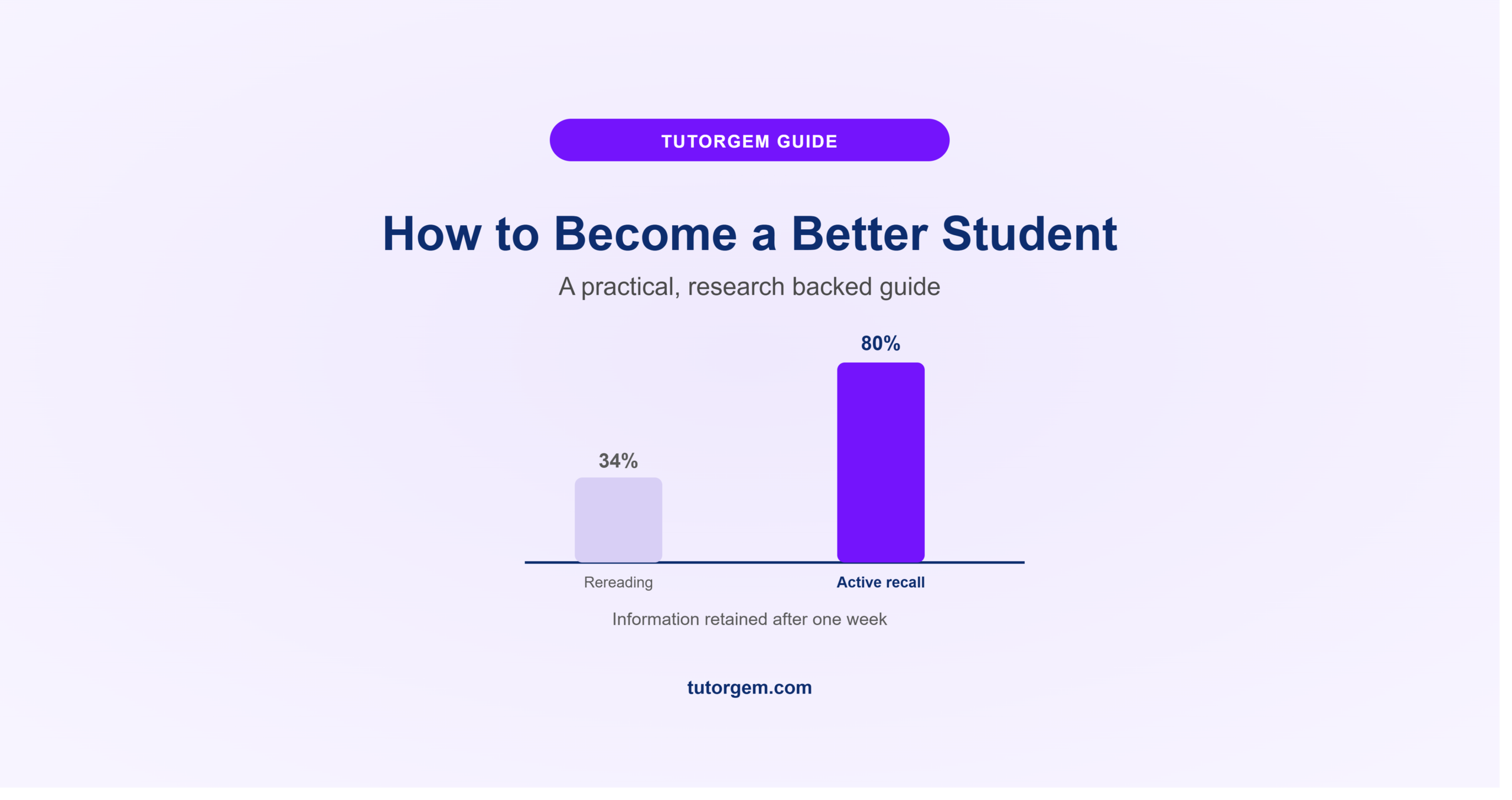
A landmark study by Roediger and Karpicke found that students who tested themselves on material retained 80 percent of it after a week, compared to just 34 percent for students who simply reread their notes. A separate review published in Psychological Science in the Public Interest rated practice testing and spaced study sessions as the only two techniques with genuinely high value, while rereading and highlighting scored low.
This research matters. It shows that learning how to become a better student depends far more on technique than raw hours spent staring at a textbook.
How to Become a Better Student: The Habits That Work
Two techniques consistently outperform everything else across decades of cognitive science research. Building a routine around them changes results faster than almost anything else.
Active Recall Beats Rereading Every Time
Active recall means testing yourself on material instead of simply reading it again. Closing the book and writing down everything you remember forces your brain to retrieve information, which strengthens memory far more than passive review.
This single shift explains most of the gap in the Roediger and Karpicke study. Testing yourself, even imperfectly, beats rereading a perfect set of notes.
Spacing Out Study Sessions
Reviewing material across several shorter sessions, spread over days or weeks, builds stronger long term memory than one long session the night before a test.
| Study Habit | Research Rating | Why It Works |
|---|---|---|
| Active recall or self-testing | High utility | Forces memory retrieval, strengthens recall |
| Spaced repetition | High utility | Fights natural forgetting over time |
| Rereading notes | Low utility | Creates familiarity without real recall |
| Highlighting text | Low utility | Feels productive but builds little memory |
| Summarizing in your own words | Moderate utility | Helps understanding, less effective alone |
Habits That Feel Productive But Rarely Help
Some study habits feel effective in the moment while doing very little for actual learning. Recognizing them saves real time.
Why Highlighting Creates a False Sense of Progress
Highlighting a textbook feels active, but it mostly involves recognizing information rather than recalling it. This creates familiarity with the page, not real memory of the content itself.
Students who rely heavily on highlighting often feel confident going into an exam, only to struggle when asked to recall the same information without the text in front of them.
A Real Case: Same Hours, Better Results
One TutorGem student spent nearly ten hours a week rereading notes and highlighting textbooks, yet his mock exam scores stayed flat for two consecutive terms.
His tutor replaced this routine with short, daily self-testing sessions and spaced review across the week, using the same total study time. Within one month, his recall of core topics improved noticeably, and his next mock exam score rose without adding any extra hours.
This case reflects the wider research pattern closely. Learning how to become a better student rarely means working longer. It means working with techniques that actually build memory.
A Simple Weekly Routine Worth Copying
Test yourself on material from three days ago at the start of each study session, before introducing anything new. This single habit builds spaced recall into your routine automatically.
Questions to Ask Yourself After Every Study Session
Ask if you could explain today’s topic without looking at your notes. Ask whether you tested yourself at all, or simply reread material you already recognized. These two checks catch weak study habits before an exam does.
How a Tutor Helps These Habits Stick
A tutor builds active recall and spaced review directly into sessions, checking real understanding rather than letting familiar-feeling but ineffective habits go unnoticed.
TutorGem’s online tutoring sessions are built around these exact research-backed techniques, helping students replace low-value habits like passive rereading with methods proven to build lasting understanding.
Frequently Asked Questions
What is the single best study technique according to research?
Active recall, testing yourself on material rather than rereading it, consistently ranks as one of the two most effective learning techniques identified across decades of research.
Is highlighting really a waste of study time?
Highlighting is not entirely useless, but research consistently rates it as low value compared to active recall and spaced repetition, since it builds recognition rather than true recall.
How often should I review material to use spaced repetition properly?
Reviewing material after one day, then three days, then a week works well for most students, gradually increasing the gap as the information becomes more familiar.
Can changing study habits really improve grades without more study time?
Yes. Research and real student cases consistently show that switching to active recall and spaced review improves results using the same total study time, not more of it.
How long does it take to notice a difference after changing study habits?
Many students notice stronger recall within two to four weeks of consistently replacing passive review with active recall and spaced repetition.
Learning how to become a better student comes down to using techniques the research actually supports, not simply logging more hours at the desk. If your current study routine feels like effort without results, TutorGem’s experienced tutors can help you rebuild it around methods proven to work, starting with your very next session.