Why Science Subjects Matter for Your Child’s Future Career?
“Why Science Subjects Matter for Your Child’s Future Career?” Every parent of a science student has heard this question at least once.
Science subjects matter for your child’s future career far beyond the classroom, though the connection often stays invisible until someone actually explains it clearly. Most students sense this vaguely without ever seeing the full picture.
This guide breaks down exactly what research shows students already believe, the career paths rarely mentioned in school, and how to help your child see science as genuinely relevant to their future, not just another subject to pass.
Students Already Sense Science Matters, But the Picture Stays Vague
Most students do not need convincing that science matters in some general sense. What they lack is a clear picture of what that actually looks like in practice.
What a Major UK Study Actually Found
A Wellcome Trust study, conducted with NFER, surveyed pupils across England, Wales, Scotland, and Northern Ireland and found that around 80 percent felt a good understanding of science would improve their career prospects. Yet the same research found many students could not name science careers beyond doctor, engineer, or vet, revealing a real gap between valuing science and understanding its actual range.
This gap explains why why science subjects matter for your child’s future career deserves a genuinely detailed answer, not just a vague reassurance that it will “come in useful someday.”
Why Science Subjects Matter Beyond the Obvious Careers
Science opens far more career paths than the handful most students can immediately name, many of which barely resemble a traditional lab coat image at all.
Careers Students Rarely Hear About at School
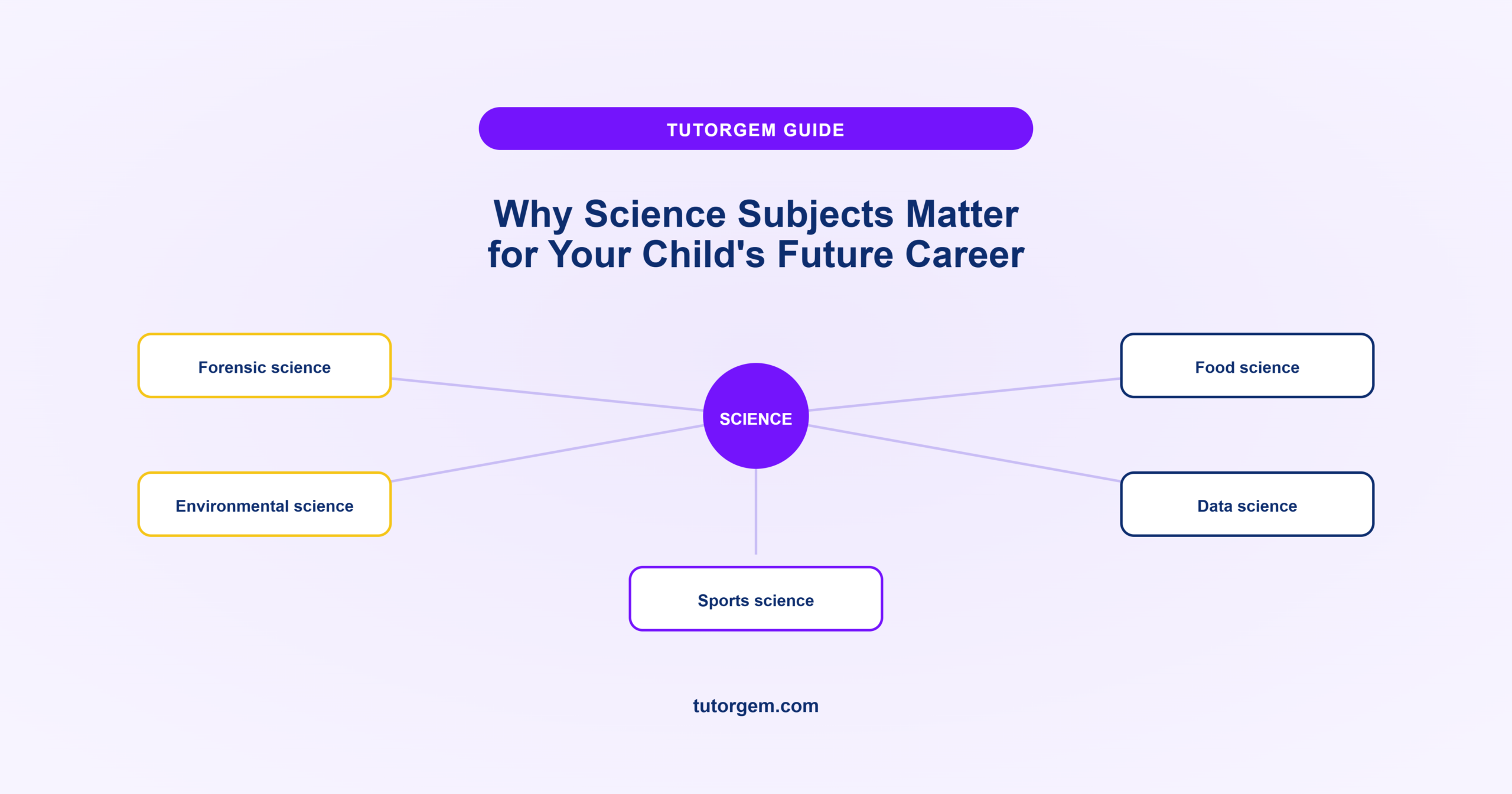
Beyond medicine and engineering, science underpins careers in forensic analysis, environmental consulting, food science, meteorology, sports science, and data-driven roles across nearly every industry. Many of these paths combine science with genuinely different interests, offering routes that feel far removed from a typical classroom science lesson.
| Science-Related Career | What It Involves |
|---|---|
| Forensic science | Analyzing physical evidence for investigations |
| Environmental science | Studying ecosystems and climate impact |
| Sports science | Applying physiology to athletic performance |
| Food science | Developing and testing food products |
| Data science | Applying statistical thinking across industries |
How Science Builds Transferable Thinking Skills
Beyond specific careers, science subjects build critical thinking, evidence evaluation, and structured problem-solving, skills that transfer directly into fields far removed from science itself, including law, business, and public policy.
The Subject Choice Decision That Shapes Later Options
GCSE and A-level subject choices quietly determine which university courses and career paths remain genuinely open later, often without students realizing the connection until it becomes relevant.
Why Dropping Science Too Early Closes Doors Quietly
Official UK careers guidance specifically notes that double award science remains essential for medicine-related careers, while also opening many other doors that a student may not have considered at the time of choosing. Dropping science too early, based purely on short-term enjoyment, can quietly close pathways a student only discovers interest in later.
A Real Case: Rediscovering Interest Through the Right Explanation
One TutorGem student had planned to drop chemistry after GCSE, convinced it held no relevance to her actual interests in fashion design and textiles.
Her tutor introduced her to the chemistry behind fabric dyes and material science, showing a genuine, tangible connection between chemistry and her actual career interest. She chose to continue with chemistry at A-level, eventually exploring textile science as a specific university pathway she had never previously considered.
This case reflects exactly why science subjects matter for your child’s future career in ways that are not always obvious from the classroom alone. The right connection can shift genuine interest significantly.
How to Help Your Child See the Bigger Picture
Connecting classroom content to a child’s actual interests, rather than generic career advice, makes the relevance of science feel real rather than abstract.
Questions to Ask Together About Science Careers
Ask what your child is genuinely curious about outside school, then explore whether a science connection exists there. Ask whether they have considered any science-adjacent careers beyond the most commonly mentioned ones at school.
How a Tutor Connects Subject Content to Real Career Paths
A tutor can draw direct, specific connections between classroom content and a student’s actual interests, something a packed school curriculum rarely has time to explore in depth.
TutorGem’s science tutoring programmes go beyond exam preparation alone, helping students see genuine relevance in biology, chemistry, and physics content tied to real career paths and personal interests.
Frequently Asked Questions
Why do students often undervalue science subjects despite finding them interesting?
Research shows many students find science genuinely interesting but lack a clear picture of the career paths it actually leads to, beyond the most obvious few options.
What careers can science subjects lead to besides medicine and engineering?
Forensic science, environmental consulting, food science, sports science, and data science all draw directly on science subject knowledge, among many other paths.
Does dropping a science subject early limit future career options?
It can. Certain university courses and careers require specific science subjects at GCSE and A-level, so dropping one too early based on short-term preference can quietly close doors later.
How can I help my child see the relevance of science to their actual interests?
Connecting classroom content to a specific personal interest, rather than general career advice, tends to make science feel genuinely relevant rather than abstract.
Can a tutor help make science feel more relevant to a student’s future?
Yes. A tutor can draw specific, personalized connections between subject content and a student’s actual interests, something a full classroom curriculum rarely has time to explore.
Understanding why science subjects matter for your child’s future career means going beyond vague reassurance and showing the genuine breadth of paths available. If your child is questioning the relevance of science, TutorGem’s experienced tutors can help connect classroom content to what actually interests them, making the subject feel worth the effort.