10 Signs Your Child Needs a Maths Tutor
Does your child suddenly go quiet whenever homework involves numbers? That silence usually means something deeper than a bad day at school.
Most parents wait too long, hoping the confusion fixes itself. Recognizing the signs your child needs a maths tutor early prevents small gaps from turning into years of lost confidence.
This guide walks through ten clear warning signs, backed by national data and a real family case, so you know exactly when it is time to step in.
Why Parents Often Miss the Early Warning Signs
Maths struggles rarely look dramatic at first. A child might still bring home decent grades while quietly avoiding certain topics or guessing through homework instead of understanding it.
Teachers manage large classrooms, so subtle gaps in one child’s understanding often go unnoticed until test results reveal the problem months later. This is exactly why so many parents wonder later whether their child needs a maths tutor, once the gap has already grown.
What National Data Reveals About Maths Struggles
According to 2025 government data published for England, 74 percent of Year 6 pupils met the expected standard in maths. This means more than one in four children left primary school without reaching that expected level.
This gap rarely closes on its own during secondary school. It usually widens, since maths builds on earlier concepts more than almost any other subject. These numbers explain why so many households eventually search for whether their child needs a maths tutor before secondary school even begins.
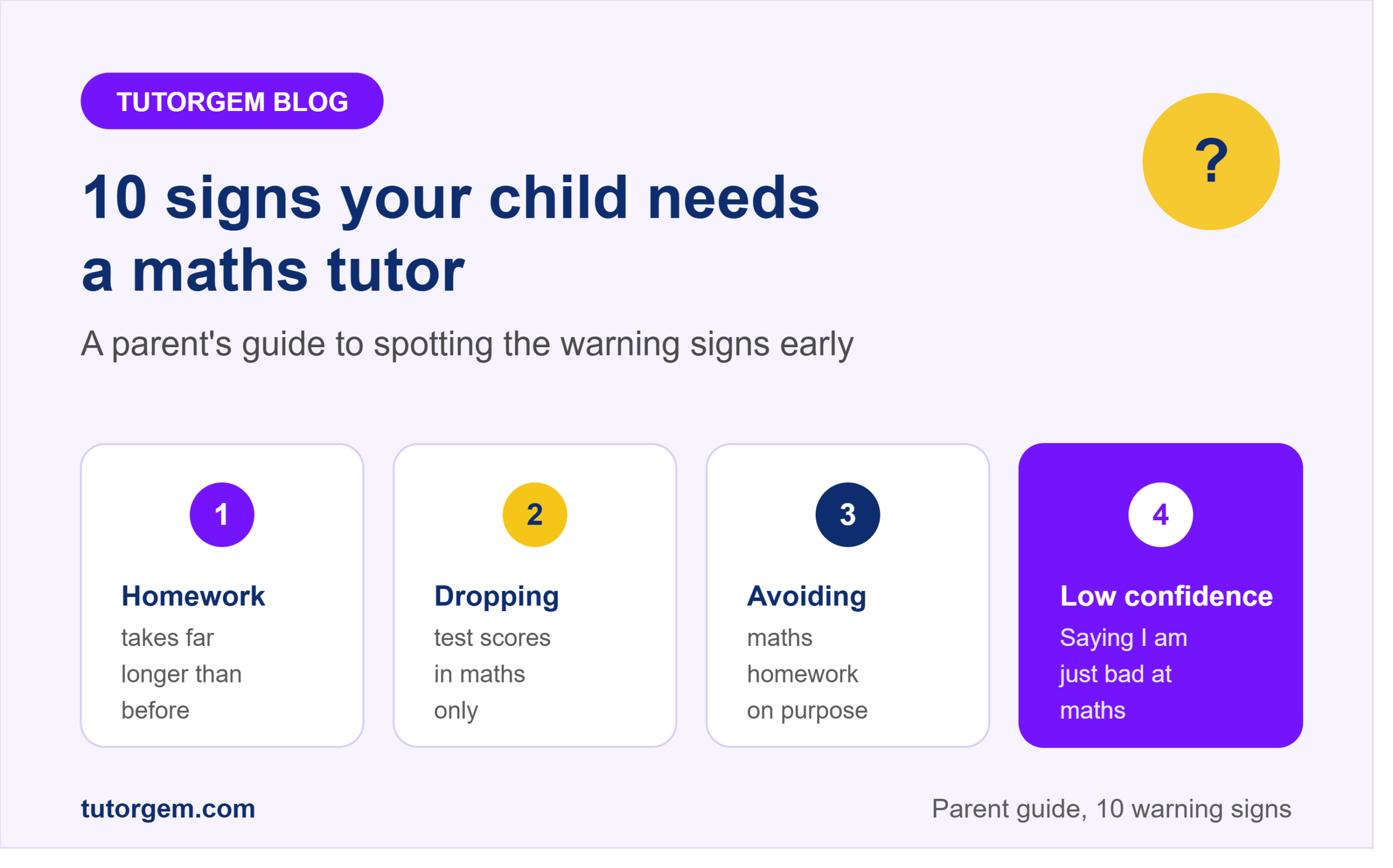
10 Signs Your Child Needs a Maths Tutor
Some signs show up in schoolwork, while others appear in your child’s mood and confidence around numbers.
Sign 1 to 5: Classroom and Homework Struggles
Watch for these patterns during homework time and school reports.
- Homework that used to take twenty minutes now takes over an hour
- Test scores in maths dropping while other subjects stay stable
- Frequent guessing on answers instead of showing working out
- Difficulty explaining how they reached an answer, even a correct one
- Avoiding maths homework until the very last minute every time
Sign 6 to 10: Emotional and Behavioral Warning Signs
Emotional signals often appear before academic ones show up on paper.
- Saying phrases like I am just bad at maths on a regular basis
- Physical complaints, like stomachaches, before maths tests or lessons
- Comparing themselves negatively to classmates during maths discussions
- Losing interest in subjects that involve numbers, including science
- Teacher comments mentioning a gap between effort and results in maths
A Real Case: Catching the Signs Early
One TutorGem family noticed their Year 8 daughter had started avoiding maths homework entirely, often claiming she had none when reports later showed otherwise.
Her parents booked an assessment session, which revealed gaps dating back to fractions and decimals from Year 5. Her parents later admitted they had wondered for months whether their child needed a maths tutor before finally booking an assessment.
A tutor rebuilt her foundation over six weeks before moving back to her current syllabus. Her confidence returned faster than her grades did, which her parents said mattered just as much as the numbers on her report card.
What Happens if These Signs Get Ignored
Maths is a cumulative subject, meaning each new topic depends on understanding the one before it. A gap from Year 5 fractions can quietly resurface years later in GCSE algebra.
Parents who delay asking whether their child needs a maths tutor often find the gap has grown wider by the time they act. Ignoring early signs also affects confidence beyond the subject itself, since children who feel behind in maths often start avoiding challenges in other academic areas too.
How a Maths Tutor Turns These Signs Around
A skilled tutor starts by identifying exactly where understanding broke down, rather than simply repeating what the classroom already covers. This targeted approach rebuilds confidence far faster than generic revision.
Recognizing the signs your child needs a maths tutor is only useful if it leads to the right kind of support. TutorGem’s maths tutoring programs start every new student with a diagnostic session to pinpoint these exact gaps before lessons begin.
What Changes in the First Few Sessions
Most parents notice a shift in attitude before grades even move. Children start attempting homework independently again, and the visible dread around maths time begins to fade.
This early emotional shift matters, since a confident child engages with harder topics far more willingly than one who feels defeated before starting.
Frequently Asked Questions
At what age should I consider a maths tutor for my child?
Tutoring can help at any age, though catching gaps during primary school, particularly around fractions and place value, prevents bigger struggles later in secondary school.
How do I know if my child needs a maths tutor or is just being lazy?
Many parents ask this exact question, whether their child needs a maths tutor or is simply going through a temporary rough patch. Genuine struggle usually involves avoidance, frustration, and inconsistent results, while laziness tends to affect all subjects equally rather than maths specifically.
How long does it take to see improvement with a maths tutor?
Most families notice improved confidence within four to six weeks, with measurable grade improvement typically following within one term.
Should I speak to my child’s teacher before hiring a tutor?
Yes. Teachers can confirm specific topic gaps and recent test performance, which helps a tutor build a more targeted starting plan.
Can online tutoring help as much as in-person tutoring for maths?
Yes. Online sessions allow for the same one on one, topic focused approach, with the added benefit of recorded lessons for later review.
Recognizing the signs your child needs a maths tutor early makes the difference between a temporary gap and years of lost confidence. If any of these ten signs sound familiar, waiting rarely makes the problem smaller. TutorGem’s experienced maths tutors can assess your child’s exact gaps this week and start rebuilding their confidence before the next school report arrives.