AS Level A Level Results Day: What to Expect and What to Do Next
Results day morning feels like the whole two years comes down to one notification. For Cambridge International students specifically, there’s a detail almost nobody explains in advance, and it changes how that morning actually plays out.
AS Level A Level results day works differently depending on which exam board you sat, and the gap between what Cambridge students see and what everyone else sees is bigger than most families expect.
This guide walks through exactly when results come out, what the embargo rule actually means for Cambridge students, and what to do next whichever way your results go. Read this before results day, not during the panic of it.
The Detail Most Guides Get Wrong: Cambridge Results Come Out Early
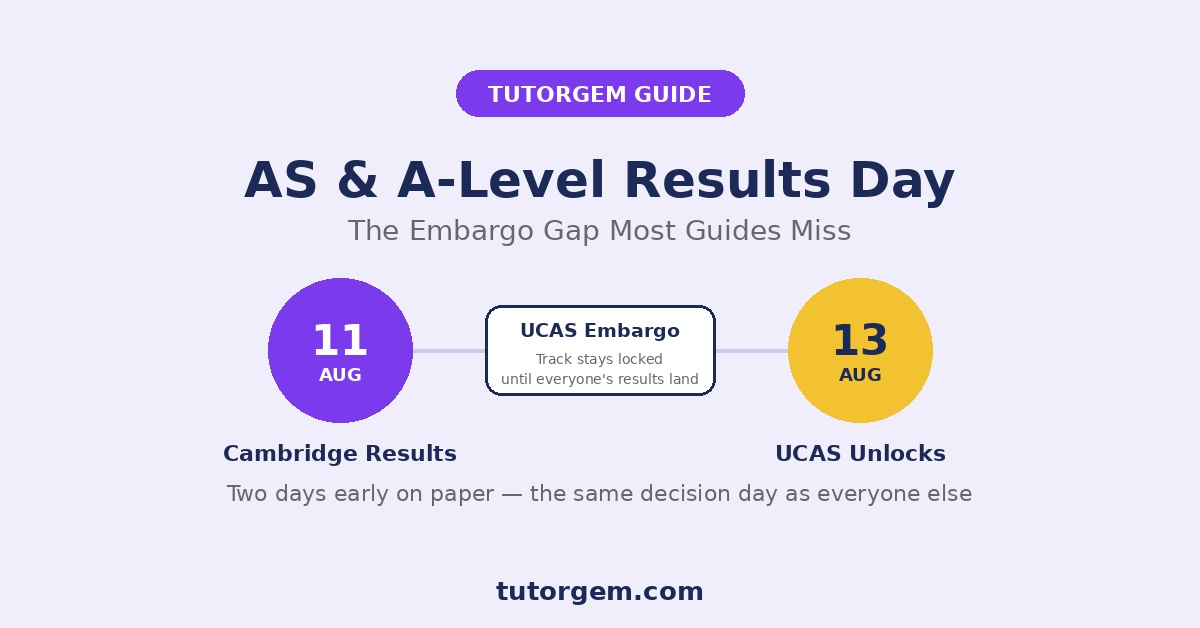
Cambridge International releases AS and A-Level results two days before UK JCQ boards and Pearson Edexcel International. In 2026, Cambridge results landed on 11 August, while Edexcel International A-Level and UK domestic results followed on 13 August.
Why This Doesn’t Actually Help Cambridge Students
Here’s the part that surprises almost everyone. UCAS operates under a strict embargo. Even though Cambridge students technically have their grades two days early, nothing appears in UCAS Track and nothing shows in Clearing until the same moment as every other board, 13 August. Discussing results with anyone before that embargo lifts can technically breach UCAS’s arrangements.
So having your grade early doesn’t translate into acting early. The real decision point still lands on the same day as everyone else.
What to Check First on Results Day
Before anything else, check your UCAS Hub status, since it determines your entire next step:
- Firm offer confirmed: your place is secured, nothing further to do
- Insurance offer confirmed: your firm choice fell through, but your backup came through instead
- Neither confirmed: you’re moving into Clearing
If Your Grades Met or Exceeded Your Offer
If your firm choice confirms, you’re done. No action needed beyond the usual enrolment steps your university sends separately.
If You Missed Your Grades by a Small Margin
Missing a grade feels catastrophic in the moment, but it’s more common than results day conversations suggest. Most universities expect some flexibility across their intake every August, and many firm offers still get confirmed even with a grade one notch below the original requirement.
Contact your firm choice university directly if your Hub status looks uncertain. Universities often confirm places that technically missed the exact grade, particularly when the miss is narrow.
Requesting a Remark: The Enquiries About Results Process
Cambridge’s remark process is called Enquiries About Results (EAR), and there’s one rule that trips up private candidates specifically: you cannot submit it yourself.
Key facts about the EAR process:
- Must be submitted through your school, Cambridge does not accept individual applications directly
- No fee is charged if the enquiry results in a grade change
- The deadline typically falls in mid-to-late September, around 20 September for the June series, so act quickly rather than waiting
Remark or Resit: Different Problems, Different Solutions
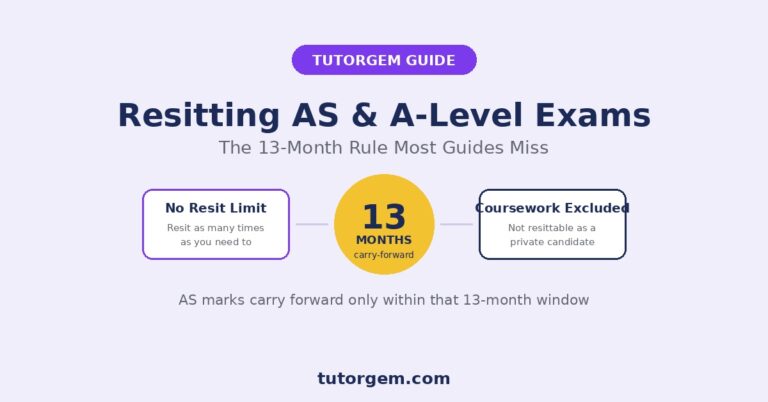
A remark corrects a possible marking error on the paper you already sat. A resit gives you a genuinely fresh attempt. If you believe a specific paper was marked incorrectly, a remark makes sense. If you simply want a better result through better preparation, a resit is the more reliable route.
Understanding UCAS Clearing
Clearing is how universities fill remaining places after results day, and it runs for several weeks into September. If neither your firm nor insurance choice confirms, Clearing becomes your active route to a place.
The standard process typically allows a turnaround of around 20 calendar days to accept a Clearing offer once made, giving you time to compare options rather than needing an instant decision.
A Realistic Example From TutorGem Sessions
One TutorGem student, sitting Cambridge International A-Levels, checked their results on 11 August and immediately assumed they could act on university decisions right away. Two days of uncertainty followed, since nothing moved in UCAS Track until the embargo lifted alongside everyone else on 13 August.
Knowing this gap existed in advance would have saved two unnecessary days of checking Track repeatedly for updates that weren’t coming yet.
Common Mistakes Students Make on Results Day
- Assuming early Cambridge results mean early UCAS action, when the embargo means nothing moves until everyone else’s results land too
- Trying to submit an EAR request individually, when Cambridge only accepts these through your school
- Waiting past the EAR deadline to decide on a remark, since the window closes faster than most students expect
How TutorGem Supports Students Through Results Day
TutorGem’s tutors help students understand their actual options the moment results land, whether that means acting quickly on a university conversation, deciding between a remark and a resit, or building a focused revision plan for the next series.
Frequently Asked Questions
When does AS Level A Level results day happen for Cambridge International students?
Cambridge International typically releases results around two days before UK JCQ boards and Pearson Edexcel International, though UCAS Track and Clearing remain under embargo until the same date as everyone else.
Can I submit an Enquiries About Results request myself?
No. Cambridge’s Enquiries About Results process must be submitted through your school. Private candidates cannot apply individually.
Is there a fee for requesting a remark?
No fee is charged if the enquiry results in your grade changing. If the grade stays the same, a fee typically applies, so confirm current costs with your school before submitting.
What’s the difference between a remark and a resit?
A remark checks for a possible marking error on the paper you already sat. A resit gives you a completely fresh attempt at the exam, which suits students wanting to improve through further preparation rather than challenge a mark.
What happens if I don’t get my firm or insurance offer confirmed?
You move into UCAS Clearing, where universities fill remaining places after results day. This process typically runs for several weeks into September.
Understanding how AS Level A Level results day actually works, especially the early-release embargo gap for Cambridge students, means you can act with confidence instead of confusion the moment your results land. If you want help deciding between a remark, a resit, or your next steps after results day, TutorGem’s tutors can talk it through with you.